Arrested by Mexican customs at San Ysidro or Otay Mesa
Southbound travelers at San Ysidro (including the El Chaparral entrance) and Otay Mesa are inspected by Mexican customs, now run by the National Customs Agency of Mexico (ANAM), often with the National Guard present. Most people cross without trouble. When there’s a problem, it usually involves something the traveler didn’t think twice about in California. This page covers arrests on the Mexican side of the crossing. Arrests by U.S. CBP when entering the United States are U.S. cases and follow U.S. law.
Secondary inspection and what officers look for
Entering Mexico, you may be sent to secondary inspection, where officers check vehicles and luggage. The items that most often lead to an arrest are:
- Ammunition and guns: even a single cartridge. Bringing non-military weapons or ammunition into Mexico without a permit carries 6 to 12 years (article 84 Bis of the Federal Firearms and Explosives Law). Common calibers such as 9 mm, .223 and 5.56 mm are classified as military-exclusive in Mexico (article 11), and bringing them in carries 7 to 30 years (article 84).
- Cannabis and THC products: legal in California, but importing drugs into Mexico is a federal crime. Only small amounts count as personal possession, for example 5 grams of marijuana (article 479 of the General Health Law).
- Prescription medication in large quantities or without a prescription.
Pedestrians vs. drivers
Pedestrians crossing at El Chaparral usually face luggage checks. Drivers face searches of the whole vehicle, and the question of who knew what was inside becomes central, especially in borrowed or shared cars.
Where the case goes
Customs arrests are federal. The person is handed over to the FGR, and the case is heard at the Federal Criminal Justice Center in Tijuana, which covers Tijuana, Tecate and Rosarito. The FGR has up to 48 hours to bring the case before a judge (article 16 of the Constitution). The judge then has 72 hours, extendable to 144, to decide whether to formally charge (article 19).
What a family in San Diego should do
- Find out whether the person was handed over to the FGR, and keep track of the time.
- Gather ID, proof of address, employment and family ties in the U.S. for the precautionary measures hearing.
- Ask that the U.S. consulate be notified (article 151 of the National Code of Criminal Procedure).
- Collect anything showing where the vehicle came from or who used it before.
Frequently asked questions about customs arrests at San Ysidro and Otay
I forgot a box of ammunition in my car. Is that really a crime?
Yes. Bringing in ammunition without a permit is a federal crime, even without a gun. Whether you knew it was there is part of the defense.
Can a U.S. lawyer represent me in Tijuana?
No. You need a lawyer licensed in Mexico to appear in Mexican federal court.
Rulings in favor of our firm
These are rulings from our firm whose English-language documents have already been reviewed and do not expose unredacted client personal data. The full list is on Successful Cases.
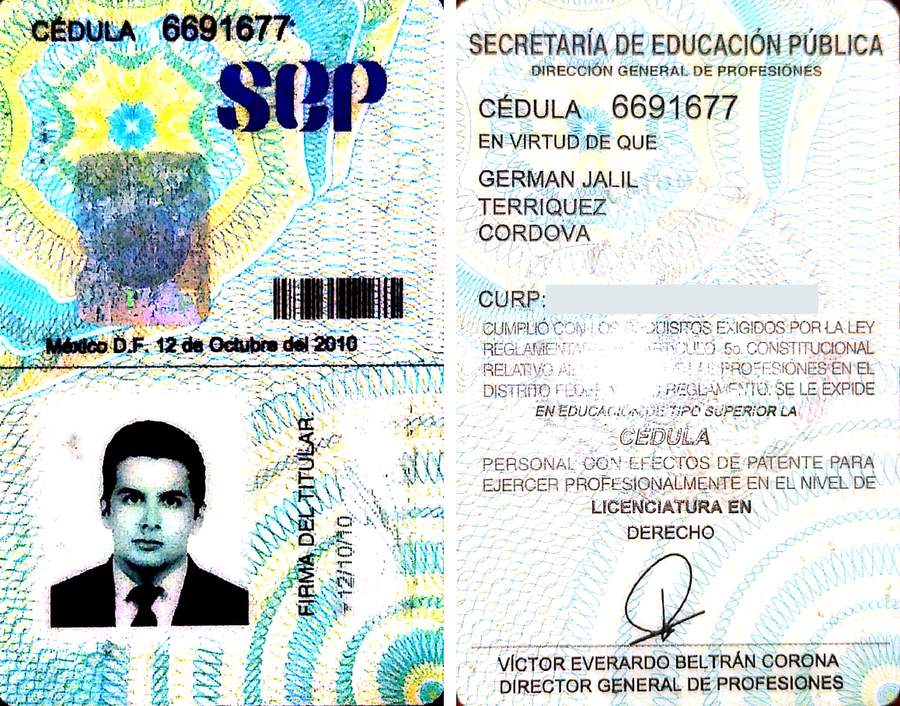
Written and reviewed by Germán Jalil Terríquez Córdova, Esq. — Founder and Managing Director of Justicia Transparente. Mexican criminal defense attorney with 15 years of experience. Professional license (cédula profesional) No. 6691677 issued by Mexico’s Ministry of Education (SEP).