
Criminal Defense Attorney in Tijuana
If you live in San Diego and work, study or have family in Tijuana, you cross the border more often than most people cross town. That is also why so many criminal cases here start with something routine: a secondary inspection at the port of entry, a traffic stop, or an old complaint that surfaces as an arrest warrant. This page explains how Mexican criminal cases work in Tijuana and what matters in the first hours.
Firearms and ammunition: the most serious border mistake
A U.S. permit or concealed-carry license is not valid in Mexico. Carrying a gun without a Mexican license is a federal crime, and bringing guns, magazines or even loose cartridges into Mexico without a permit is a separate federal offense. Since the reform published on May 29, 2025, Article 84 Bis of the Federal Firearms and Explosives Law sets 6 to 12 years for non-military weapons and ammunition, and Article 84 sets 7 to 30 years for those reserved to the armed forces. A defense in these cases looks closely at how the inspection was done, who found the item and whether the chain of custody holds up.
Undeclared goods and smuggling (contrabando)
Mexican customs can refer travelers to the federal prosecutor (FGR) when goods are brought in without declaring them or paying duties, whether it is merchandise, precious metals or a vehicle. Smuggling is prosecuted under Mexico’s Federal Tax Code, and the amount of unpaid duties drives how serious the charge is. Many of these cases can be closed by paying the duties and penalties through an alternative resolution such as a conditional suspension of the proceedings. Getting there takes a lawyer who can bring the customs authority into the negotiation early.
Drug charges in Tijuana
Mexico’s General Health Law treats only very small amounts as personal use. For marijuana the limit is 5 grams (Article 479). Above that threshold, small-quantity cases (narcomenudeo) are usually handled by the state prosecutor. Larger amounts, or anything brought across the border, go to the FGR. Products that are legal in California, such as THC edibles and vape cartridges, get no special treatment. The most common mistake is trying to explain things to the police before a lawyer arrives.
- Possession of marijuana, methamphetamine or other substances
- Prescription medication without a Mexican prescription
- Possession with intent to sell
- Students and young people arrested at checkpoints
How a criminal case moves through Tijuana’s courts
Knowing who prosecutes and which judge hears your case shapes the defense from the first hearing. Tijuana has two tracks:
- State crimes (theft, fraud, assault, domestic violence, sexual offenses, small-quantity drug possession): investigated by the Fiscalía Regional de Tijuana of the Baja California State Attorney General’s Office and heard by state control judges in the Tijuana judicial district.
- Federal crimes (smuggling, firearms and ammunition, larger drug cases, tax crimes): prosecuted by Mexico’s federal Attorney General (FGR) and heard at the Federal Criminal Justice Center in Tijuana, which also covers Tecate and Playas de Rosarito.
Many criminal cases in Tijuana start at a port of entry: San Ysidro, El Chaparral or Otay Mesa. A customs inspection on the way into Mexico can turn into a firearms or smuggling charge, often against people who live between Tijuana and San Diego. The time between arrest and the initial hearing is short, and that hearing decides whether you can fight the case out of custody.
Our Tijuana office is at Ios Offices Vía Corporativo, Misión de San Javier 10643, Zona Urbana Río Tijuana, 22010 Tijuana, B.C. The firm is led by attorney Germán Terríquez Córdova, with 15 years of experience in criminal defense.
Real case in Tijuana: U.S. citizen released at the initial hearing
A U.S. citizen was detained at Tijuana International Airport. His family called us at 2:00 a.m., and by 9:00 a.m. we were already with him to represent him at the initial hearing.
In Mexico it is almost automatic that, when the accused is a foreign national, the prosecutor’s office will request pretrial detention (prisión preventiva justificada) alleging a flight risk. That is what happened in this case. Because it took place before the December 2024 reform, the offense did not call for mandatory pretrial detention (prisión preventiva oficiosa), and the question was whether the measure was justified.
We showed the judge that being a U.S. citizen, by itself, does not establish a risk of flight. We relied on case law and on the extradition and cooperation treaties between Mexico and the United States, which allow a person to be located and returned if they fail to appear. The judge denied pretrial detention, and our client was released to continue his case.
This case is described without personal details to protect the client’s confidentiality. Every case is different, and the outcome depends on its circumstances.
Useful guides: Mexican gun laws; Mexican smuggling laws; Mexican drug laws; arrested in Tijuana; drug charges in Tijuana.
Tijuana FAQ for U.S. citizens and cross-border families
How long can I be held before seeing a judge?
Up to 48 hours with the prosecutor (Article 16 of the Mexican Constitution). The judge then has 72 hours, which the defense can ask to extend to 144, to decide whether to bind you over for trial (Article 19). Organized-crime cases have different deadlines.
Will Mexico notify the U.S. Consulate?
Yes. Under Article 151 of the National Code of Criminal Procedure, the prosecutor must tell you about your right to consular assistance and notify the consulate, unless you and your lawyer ask them not to. The U.S. Consulate General in Tijuana can visit you and contact your family, but it cannot represent you in court.
Can I fight my case from San Diego?
Sometimes. If the judge allows it, you may stay out of custody with measures such as periodic check-ins or a bond. A travel ban is also possible. Proof of a stable home, job and family ties helps the judge decide.
I think there is a warrant for me in Baja California. Should I cross?
Not before checking. A lawyer can verify whether there is a complaint or a warrant and, depending on the offense, seek an amparo or arrange a voluntary appearance before you cross.
Rulings in favor of our firm
These are rulings from our firm whose English-language documents have already been reviewed and do not expose unredacted client personal data. The full list is on Successful Cases.
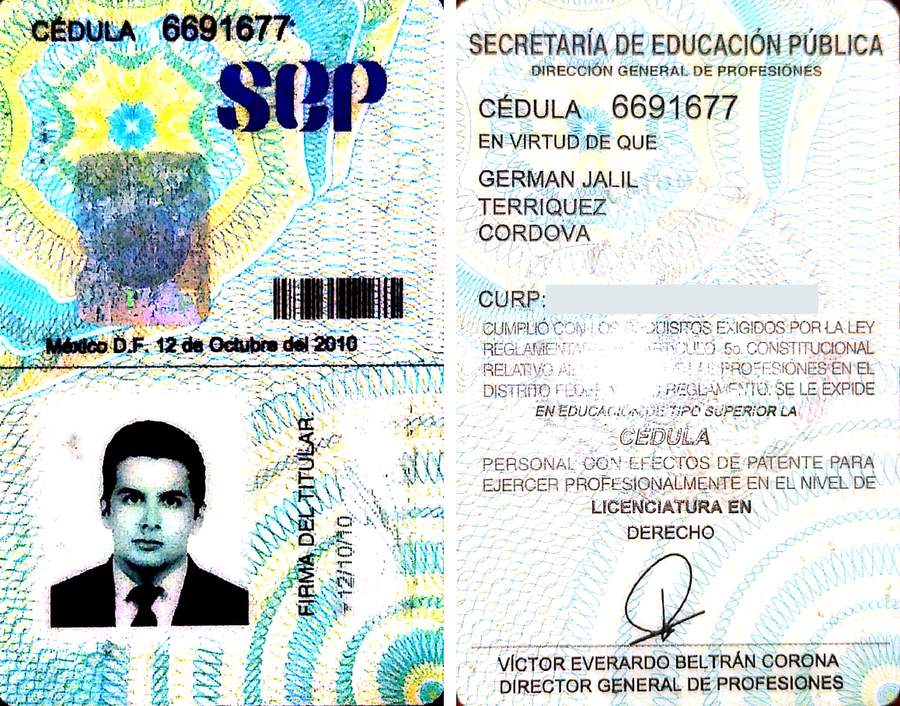
Written and reviewed by Germán Jalil Terríquez Córdova, Esq. — Founder and Managing Director of Justicia Transparente. Mexican criminal defense attorney with 15 years of experience. Professional license (cédula profesional) No. 6691677 issued by Mexico’s Ministry of Education (SEP).
Check the attorney’s license here