

Mexican drug laws? Mexico has strict laws and severe penalties for individuals caught with prohibited or regulated drugs. Although there are laws that specify limits for personal use, the reality is that foreign citizens may be arrested and sent to jail in such cases. This is because the law does not establish a clear procedure for police officers to determine the quantity or type of drug, which does not prevent individuals from being referred to the prosecutor’s office. Here are some tips and key points regarding Mexican laws related to drug use.
MEXICAN DRUG LAWS : MAIN POINTS TO CONSIDER
- Usage Restrictions: Mexican law only permits certain drugs to be used for personal consumption, which are the following:
- opium (2 grams)
- Heroin (50 milligrams )
- Cannabis Sativa, Indica or Marijuana (5 grams)
- Cocaine (500 milligrams)
- LSD (0.015 milligrams)
- MDA or love pill (40 milligrams)
- MDMA also known as ecstasy or molly (40 milligrams)
- methamphetamine (40 milligrams)
- You do not need a license issued by any Mexican authority to consume drugs for personal use: You do not need to apply for a permit to consume drugs in the quantities established in the first point. However, it is advisable to engage in these activities in private spaces or places other than public areas. This recommendation is due to the fact that police officers do not have a defined procedure to follow if they catch someone with drugs on the street. They will not determine the type or amount of the drug, as police officers are neither chemists and not carry scales with them. As a result, you will likely be arrested so that the public prosecutor can verify the legal situation. It’s better to avoid doing so.
- Licenses and Permits: It is possible to consume drugs in quantities greater than those indicated in the first point or even other types of drugs; however, this is only allowed for medical reasons. You will need a prescription from a doctor who has prescribed that drug, and you must have obtained it from an established pharmacy.
Regarding marijuana and its derivatives, you can consume amounts exceeding those established in the first point as long as you have obtained a court order from a human rights judge in Mexico (known as an “amparo”) allowing you to do so. This is because Mexican law recognizes the use of marijuana as a human right linked to the free development of personality.
- Do not travel with drugs to Mexico (you could face sentences of up to 25 years in prison): Mexican criminal law imposes severe penalties for individuals entering Mexico through the U.S. border or its airports. The reason is that there is a specific crime for those who introduce drugs, and in these cases, it doesn’t matter if the drug is small or does not exceed the amount allowed for personal consumption. Therefore, you should avoid making this mistake.
- Mexican beaches are not “drug consumption-free zones.“: Mexican authorities have never designated Mexican beaches as areas where drugs can be freely consumed. So, don’t fall for that trap by companies making such claims. The reality is that if you are caught with drugs by the tourist police on any Mexican beach, you will be arrested for drug-related offenses.
- Penalties: Most penalties related to drug possession are low, starting with sentences of 10 months in prison. This penalty applies to those who possess drugs exceeding the amount allowed for personal use and can usually be resolved through a deal with the prosecutor, where the offender commits to not doing it again and begins a detoxification treatment. However, there are penalties that can go up to 25 years in prison for individuals who bring drugs into Mexico or travel on Mexican highways with drugs and are arrested by a police officer on a freeway.
2026 Update: Legal Developments on This Topic
Mexico’s drug laws in 2026 still revolve around the same six ideas we summarized in 2024, but several of them have been sharpened by new rules, court decisions and enforcement priorities. Here is how each point looks today.
Point one: possession for personal use is narrowly protected. The General Health Law contains a table of maximum quantities considered for personal and immediate use, such as five grams of cannabis or half a gram of cocaine. Above those amounts, or when there are signs of distribution, prosecution becomes likely. Mexico’s Supreme Court declared the absolute ban on recreational cannabis use unconstitutional in 2021, but Congress never passed a regulation for legal sales, so buying or transporting cannabis is still a crime.
Point two: trafficking and importation remain severely punished. The Federal Criminal Code keeps ten to twenty-five years in prison for producing, transporting, trafficking, trading or bringing narcotics into the country. Proposals presented in Congress in 2025 to raise fentanyl penalties to fifty or sixty years had not become law as of this update, but prosecutors pursue fentanyl cases aggressively.
Point three: synthetic drugs now trigger automatic detention. Since January 1, 2025, article 19 of the Constitution requires mandatory pretrial detention for crimes involving fentanyl, synthetic drugs and their chemical precursors. That rule is part of an ongoing debate: in November 2026 the Supreme Court ordered lower courts to pause amparo cases challenging automatic detention while it prepares a general ruling.
Point four: vapes joined the list of criminal risks. A General Health Law reform published on January 15, 2026 punishes the manufacture, distribution and sale of vaping devices with one to eight years in prison and fines of up to 2,000 UMA. Bringing several devices across the border can be interpreted as intent to distribute.
Point five: international cooperation is tighter. Washington added several Mexican cartels to its list of foreign terrorist organizations in February 2025 and, during 2025 and January 2026, Mexico transferred 92 people accused of serious crimes to U.S. custody through special government decisions rather than ordinary extradition. In July 2025 the U.S. also enacted a law permanently placing fentanyl-related substances in its strictest drug schedule. Drug cases with any link to organized crime can now have consequences in both countries.
Point six: enforcement is concentrated at borders, airports and highways. The National Guard, part of the Ministry of National Defense since 2025, works with customs officials and state police using canine teams, scanners and data platforms created by the 2025 intelligence law. Many arrests begin with a routine inspection of a vehicle or a suitcase.
For travelers, the practical message is simple: do not bring cannabis, THC edibles, vapes or unprescribed controlled medications into Mexico. Carry original prescriptions and labeled containers for any medicine. If you are detained, ask for a lawyer and consular notification and avoid informal explanations to officers.
Justicia Transparente has 15 years of experience defending people accused of drug offenses in Mexico, including many foreign visitors. We do not guarantee outcomes; we review each file carefully and explain the real options under the 2026 legal framework.
Related guides: Mexico drug crimes and penalties directory; what drugs are legal in Mexico; is personal weed use illegal in Mexico; Baja California marijuana laws; Quintana Roo marijuana laws; drug crimes guide for U.S. travelers; drug charges attorneys in Tijuana.
Real case from our firm
This is a ruling from our firm whose English-language document has been reviewed in a public version and does not expose unredacted client personal data: American released in 3 days for marijuana possession. The full list is on Successful Cases.
The Mexican criminal process explained in English

Facing Charges in México?.


Known as “the Transparent Attorney,” he founded Justicia Transparente, turning it into a nationally recognized firm for its results and leadership. The author of four books, he has demonstrated that in this field, experience and strategy make the difference.
Written and reviewed by Germán Jalil Terríquez Córdova, Esq. — Founder and Managing Director of Justicia Transparente. Mexican criminal defense attorney with 15 years of experience. Professional license (cédula profesional) No. 6691677 issued by Mexico’s Ministry of Education (SEP).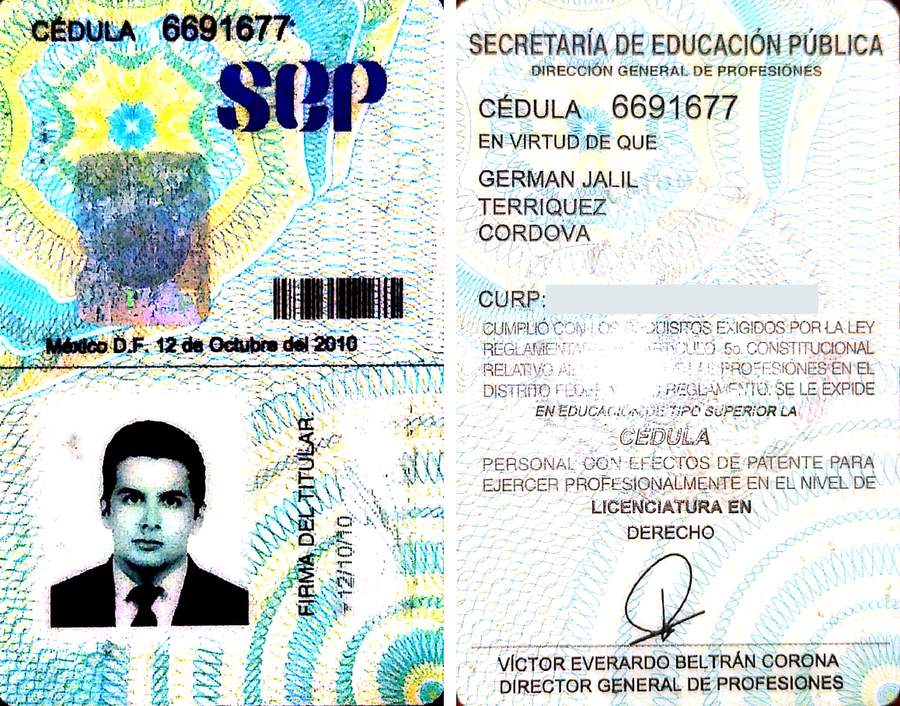
Check the attorney’s license here