

Understanding Mexico’s Gun Laws New Firearms Law Reform
The Arms Law in Mexico, on May 29, 2025, was reformed and the penalties for people related to these types of crimes were considerably aggravated, many of which prevent reaching an agreed-upon sentence that could help obtain libertary benefits, also known popularly as unprohibition. Here we will outline the changes established by the Arms Law, the articles that regulate it, and the legal recommendations that the Mexican transparency proposes to be able to face them in case you find yourself in this situation. And if you are North American citizens.
To Understand the Firearms Covered Under Articles 9, 10, and 11, It Is Essential to Analyze From the Beginning the Provisions Establishing Which Weapons Are Included Within Articles 9, 10, and 11
Article 9 of the Federal Firearms and Explosives Law establishes the firearms that civilians in Mexico may legally possess or carry under certain restrictions and with authorization from the Mexican Ministry of Defense.
This article generally authorizes possession of semi-automatic pistols with calibers not exceeding .380 and revolvers not exceeding .38 Special, while specifically excluding calibers such as .38 Super, .357 Magnum, and several 9 mm variants.
Accused a relative of a crime in Mexico? Do you need to know if it is a crime to bring weapons into Mexico? Do you need to know if it is a crime to bring marijuana into Mexico? The prosecutor is accusing me of having committed a crime that I did not commit? Has your loved one been in jail in Mexico for years?
If you are in one of these situations, hire an online consultation.
Do you want to avoid an arrest warrant against you in Mexico?
It also authorizes certain firearms for rural workers, ejidatarios, hunters, and sport shooters, provided they comply with registration requirements established by Mexican law.
Article 10 establishes additional categories of firearms that may be authorized for individuals involved in sport shooting and hunting activities who are registered with legally recognized shooting clubs or associations.
Visit our online store
One of our products can help you
This provision includes .22 caliber rifles and pistols, certain .380 caliber pistols, authorized shotguns, hunting rifles, and other sporting firearms that comply with Mexican regulations.
However, Article 11 establishes the firearms, ammunition, magazines, and military materials reserved exclusively for the use of the Mexican Armed Forces.
Among the weapons reserved for exclusive military use are .357 Magnum revolvers, 9 mm Parabellum pistols, .38 Super pistols, assault rifles in calibers such as .223, 5.56 mm, 7.62 mm, .50 caliber weapons, automatic firearms, machine guns, military-grade ammunition, silencers, grenades, explosives, and other military equipment.
Understanding the distinction between Articles 9, 10, and 11 is essential in firearm-related criminal cases in Mexico because the legal consequences vary significantly depending on whether the firearm is considered legal for civilian possession, authorized for sporting purposes, or reserved exclusively for military use under Mexican law.
It is important for you to understand that the offense punished under this law is the act of altering or modifying a firearm from the way it was originally manufactured, regardless of whether the modification decreases or increases its power. The criminal statute punishes the act of changing the weapon itself.
Regarding the three subsections, each of which constitutes a separate criminal offense, it is important to point out the following:
With respect to subsection I of Article 81 Bis, it is possible to reach an agreement with the prosecutor and the judge through a legal mechanism in Mexico known as “conditional suspension of the criminal process” (suspensión condicional del proceso), which is somewhat similar to probation in the United States. Through this mechanism, you may even be released from custody if you are under arrest and avoid having a criminal record against you.
On the other hand, subsection II establishes the most serious penalty under this article. In this situation, your only realistic option may be to accept responsibility in order to receive a sentence of four years, since Mexican law allows the prosecutor to reduce one-third of the minimum sentence if you accept responsibility. In this case, the minimum sentence may be reduced to four years. A four-year sentence may allow you to qualify for certain liberty-related benefits or alternatives to incarceration under Mexican law.
Subsection III establishes the lowest penalty under the article. In this case, it would generally follow the same legal path explained under subsection I.
It is important to mention that you always have the constitutional right to proceed to trial if you do not agree to any of these alternatives.
Our recommendation at Justicia Transparente is, first and foremost, to challenge the legality of the accusation, seek dismissal of the case, attempt to have the charges thrown out, and fight for you to remain free while the case is pending through a legal mechanism known as a “precautionary measure” (medida cautelar), which is somewhat similar to release on bail. However, it is important to understand that the Mexican system of pretrial release and precautionary measures operates very differently from the bail system commonly used in the United States.
Article 82. — Any person who transfers ownership of a firearm without the corresponding permit shall be punished with imprisonment from one to six years and a fine of one hundred to five hundred times the daily value of the Unit of Measurement and Update (UMA).
The transfer of ownership of two or more firearms without a permit, or repeat commission of the conduct described in the preceding paragraph, shall be punished with imprisonment from five to fifteen years and a fine of one hundred to five hundred times the daily value of the Unit of Measurement and Update (UMA).
This article establishes one base offense and one aggravated offense. In this regard, it is important to understand that Mexican law requires any transfer of ownership of a firearm to be reported to the Mexican Army. Unlike the United States, in Mexico it is generally illegal to possess a firearm unless the person has authorization or the corresponding permit issued by the Mexican Army. Firearm possession is highly regulated in Mexico.
Under the first offense, if a person transferred ownership of a firearm without notifying the Mexican Army, it may be possible to reach an agreement known in Mexico as “conditional suspension of the criminal process” (suspensión condicional del proceso), which is somewhat similar to probation.
However, if the offense is aggravated because two or more firearms were transferred without informing the Mexican Army and the government agencies that regulate firearms, the penalties range from five to fifteen years in prison. In this second scenario, you would not qualify for a probation-type resolution, and it would likely be necessary to negotiate an agreed sentence with the prosecutor in order to obtain release from custody if you are arrested.
As with the previous article, our recommendation is first to analyze and challenge the legal basis of the accusation. If it is in your best interest to seek a faster resolution and regain your freedom, it may be possible to negotiate an agreement with the prosecutor that could allow you to be released.
Article 83. — Any person who, without a valid license, carries a firearm reserved for the exclusive use of the Permanent Armed Forces shall be punished as follows:
I. Imprisonment from three months to one year and a fine of one to ten times the daily value of the Unit of Measurement and Update (UMA), when the firearm falls under subsections (i) and (m) of Article 11 of this Law;
II. Imprisonment from five to ten years and a fine of one hundred to three hundred times the daily value of the Unit of Measurement and Update (UMA), when the firearm, its parts, or components fall under subsections (a) and (b) of Article 11 of this Law;
III. Imprisonment from six to fifteen years and a fine of one hundred fifty to five hundred times the daily value of the Unit of Measurement and Update (UMA), when the firearm falls under subsections (c), (d), and (e) of Article 11 of this Law; and
IV. Imprisonment from twenty to thirty years and a fine of one thousand to five thousand times the daily value of the Unit of Measurement and Update (UMA), when the firearm falls under subsections (g), (h), (j), (k), and (l) of Article 11 and Article 11 Bis of this Law.
If two or more firearms are carried, the applicable penalty shall be increased by one-third up to two-thirds of the penalties established in this article.
When three or more persons possess, carry, or use firearms described in subsections III and IV of this article, the penalty applicable to each person shall be increased from two-thirds up to double the penalty corresponding to the basic offense.
Any person who uses the firearms described in the preceding paragraph against legally constituted authorities shall have the prison sentence established in subsection IV of this article doubled.
As you can see, only subsection I of this article allows for an alternative resolution through a mechanism known as “conditional suspension of the criminal process” (suspensión condicional del proceso), which is similar to probation and would allow you to avoid having a criminal record.
Similar to the United States, there will typically be a supervising authority or probation-type officer who will monitor compliance during the period of the agreement to ensure that you fulfill the conditions imposed by the Mexican criminal justice system.
With respect to subsections II, III, and IV of this offense, these involve serious penalties. In practice, under subsections II and III, the main possibility to obtain liberty-related benefits would generally be through accepting responsibility for the conduct charged.
It is important to understand that, in order to qualify for these benefits in Mexico, you generally must not have prior criminal convictions or criminal records within Mexico. However, having criminal records or prior convictions in another country does not necessarily prevent you from obtaining these legal benefits in Mexico.
Article 83 Bis. — Any person who, without the corresponding permit, stockpiles and possesses more than five firearms reserved for the exclusive use of the Permanent Armed Forces shall be punished as follows:
I. Imprisonment from six to nine years and a fine of one hundred to three hundred times the daily value of the Unit of Measurement and Update (UMA), if the firearms fall under subsections (a) or (b) of Article 11 of this Law. In the case of subsection (i) of the same article, the penalty shall be imprisonment from one to three years and a fine of five to fifteen times the daily value of the Unit of Measurement and Update (UMA); and
II. Imprisonment from seven to thirty years and a fine of one hundred to five hundred times the daily value of the Unit of Measurement and Update (UMA), if the firearms fall under any of the other weapons listed in subsections (c), (d), (e), (f), (g), (h), (j), (k), (k) bis, and (l) of Article 11 of this Law.
In the case of firearms that are otherwise legally permitted, possession of more than five firearms described in Articles 9 and 10 of this Law without the corresponding permit shall be punished as follows:
I. Imprisonment from one to four years and a fine of ten to two hundred times the daily value of the Unit of Measurement and Update (UMA), if the firearms fall under Sections I and II of Article 9 of this Law; and
II. Imprisonment from one to seven years and a fine of fifty to three hundred times the daily value of the Unit of Measurement and Update (UMA), if the firearms fall under any of the categories listed in Sections I through VI of Article 10 of this Law.
In this case, only under subsection II of the first offense category is it impossible to reach an agreed sentence — commonly known as a “parole deal” — for purposes of obtaining release by accepting guilt. This is because, as previously explained, the prosecutor only has the authority to reduce up to one-third of the minimum sentence established by law and, as indicated, the minimum sentence is seven years of imprisonment. Therefore, it would not reach the four-year maximum sentence threshold that allows a person to qualify for release-related benefits if found guilty.
Accordingly, if you fall within the circumstances described in subsection II, it is advisable to proceed to trial or seek dismissal of the case through a legal strategy developed by your defense attorney.
In the other three scenarios, it is possible to negotiate agreements or plea arrangements and potentially obtain release.
Article 83 Ter. — Any person who, without the corresponding permit, possesses a firearm reserved for the exclusive use of the Permanent Armed Forces, or its parts or components, shall be punished as follows:
I. Imprisonment from three months to one year and a fine of one to ten times the daily value of the Unit of Measurement and Update (UMA), when the firearm or accessories fall under subsections (i) and (m) of Article 11 of this Law;
II. Imprisonment from four to seven years and a fine of one hundred to three hundred times the daily value of the Unit of Measurement and Update (UMA), when the firearm or its parts or components fall under subsections (a) and (b) of Article 11 of this Law;
III. Imprisonment from five to twelve years and a fine of sixty-five to two hundred times the daily value of the Unit of Measurement and Update (UMA), when the firearm, ammunition, or cartridges fall under subsections (c), (d), (e), and (f) of Article 11 of this Law; and
IV. Imprisonment from six to fifteen years and a fine of fifty to three hundred times the daily value of the Unit of Measurement and Update (UMA), when the firearm falls under subsections (g), (h), (j), (k), and (l) of Article 11 of this Law.
Any person who possesses any quantity of explosives without the corresponding permit shall be punished with the same penalties established in subsection III of this article.
Article 83 Quáter. — Any person who, without authorization, possesses, carries, or transports ammunition or cartridges in quantities greater than those established in Article 50 of this Law shall be punished as follows:
I. Imprisonment from one to four years and a fine of ten to fifty times the daily value of the Unit of Measurement and Update (UMA), if the ammunition or cartridges correspond to firearms described in Articles 9, 10, and Article 11 subsections (a) and (b) of this Law; and
II. Imprisonment from four to seven years and a fine of one hundred to three hundred times the daily value of the Unit of Measurement and Update (UMA), if the ammunition or cartridges correspond to firearms described in the remaining subsections of Article 11 of this Law.
Article 83 Quinquies. — Any person who, without authorization, possesses, carries, or transports magazines, as well as any other accessory used to load ammunition or cartridges into a firearm reserved for the exclusive use of the Permanent Armed Forces, shall be punished as follows:
I. Imprisonment from two to four years and a fine of fifty to one hundred times the daily value of the Unit of Measurement and Update (UMA), when the offense involves between two and five magazines or other accessories; and
II. Imprisonment from four to eight years and a fine of two hundred to four hundred times the daily value of the Unit of Measurement and Update (UMA), when the offense involves more than five magazines or other accessories.
The penalties established in this article shall be imposed independently of any penalties corresponding to the commission of other offenses.
The penalty related to magazines shall not merge into the penalty for possession or carrying of a firearm if the magazine does not correspond to or feed the firearm involved.
Article 83 Sexies. — Any person who unlawfully uses or distributes the following shall be punished with imprisonment from four to eight years and a fine of seven hundred to one thousand five hundred times the daily value of the Unit of Measurement and Update (UMA):
I. Designs, instructions, digital blueprints, manuals, software, or machines for the manufacture of firearms, magazines, parts, or components;
II. Devices or modifications intended to convert semiautomatic firearms into automatic firearms through additive manufacturing techniques, three-dimensional printing, or artisanal methods; and
III. Night vision equipment, laser designators, holographic sights, thermal sights, as well as any accessories used to enhance the use of weaponry in activities unrelated to lawful recreational hunting or sport shooting.
Article 83 Septies. — Any person who uses armored vehicles described in Article 11 of this Law, as well as privately owned vehicles modified with any type of armor and adapted for the use of weaponry, shall be punished with imprisonment from five to fifteen years and a fine of five hundred to one thousand times the daily value of the Unit of Measurement and Update (UMA).
Any person who professionally or artisanally manufactures, assembles, or armors vehicles without the corresponding authorization shall be punished with imprisonment from four to ten years.
Article 84. — Any person shall be punished with imprisonment from seven to thirty years and a fine of two hundred fifty to two thousand times the daily value of the Unit of Measurement and Update (UMA) if that person:
I. Participates in the unlawful introduction into national territory, without the corresponding authorization, of devices intended to convert semiautomatic firearms into automatic firearms, as well as firearms, their parts or components, magazines, ammunition, cartridges, parts or components, explosives, and materials reserved for the exclusive use of the Permanent Armed Forces or otherwise subject to control under this Law;
II. Is a public official who, being obligated by the duties of their position to prevent the introduction referred to in the preceding subsection, fails to do so. In addition, such person shall be removed from office, position, or commission and disqualified from holding employment, office, or commissions in public service;
III. Sells, acquires, or commercializes the objects referred to in subsection I; and
IV. Participates in the unlawful trafficking of firearms, their parts, components, ammunition, cartridges, explosives, and materials reserved for the exclusive use of the Permanent Armed Forces or otherwise subject to control under this Law.
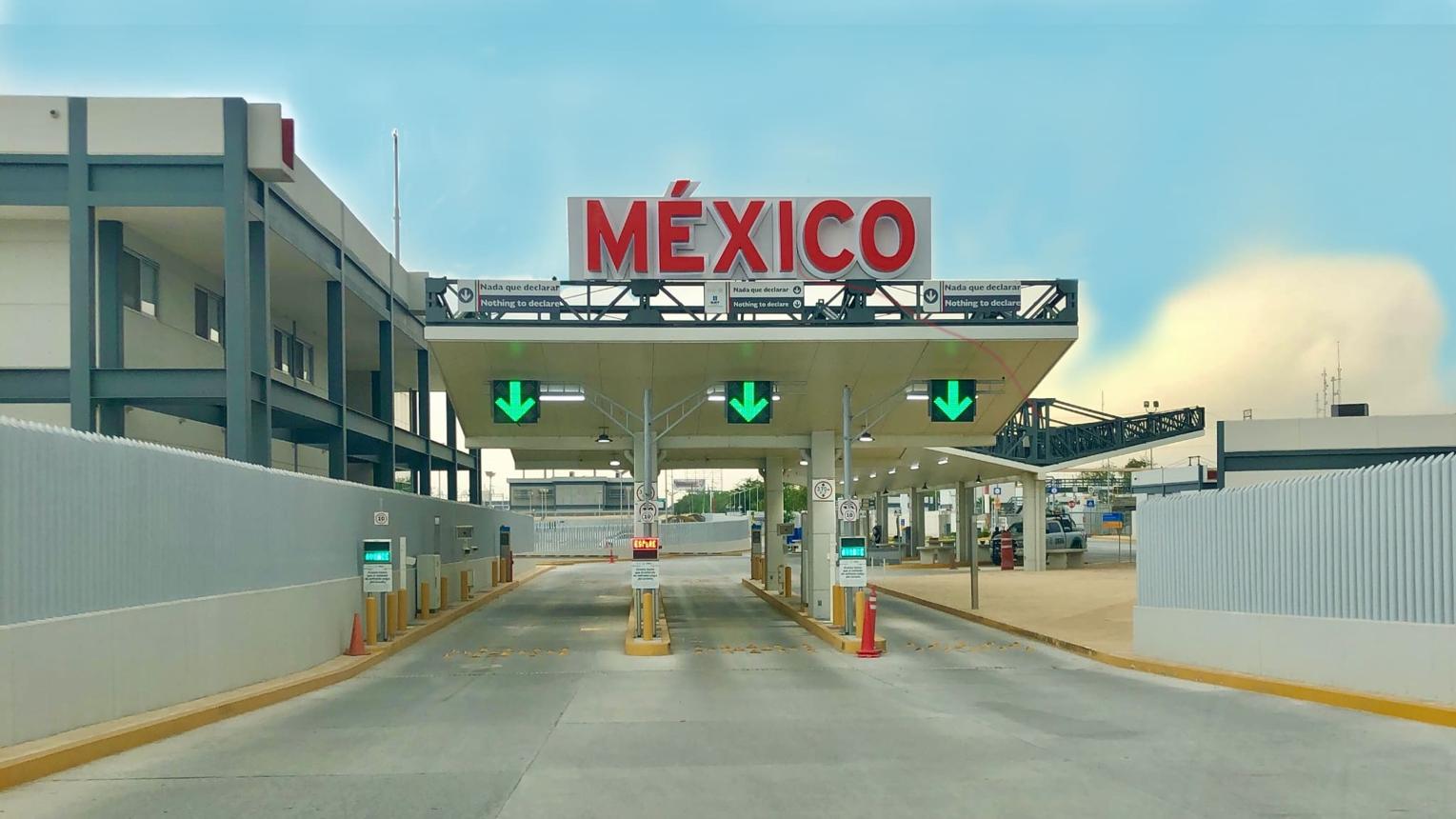
This is one of the most significant legal reforms affecting foreign citizens — particularly Americans — who forget they are carrying a firearm when entering Mexico. It is very common for people to travel from the United States into Mexico for dental services, to visit family members, or for tourism purposes and, because they legally possess firearms in states such as California or even states where no permit is required, such as Arizona, they mistakenly enter Mexico with a firearm in their vehicle.
In many cases, individuals accidentally take the wrong freeway and end up crossing into Mexican customs, or they simply do not understand that possessing or introducing a firearm into Mexico can constitute a serious federal offense. This exact scenario has become a major legal problem for American tourists because Mexican prosecutors frequently charge these individuals with the crime of unlawful introduction of firearms into Mexico, an offense carrying penalties ranging from 7 to 30 years in prison.
Because the minimum sentence is seven years, even after reducing one-third of the minimum punishment, the sentence still does not fall below the four-year threshold necessary to qualify for release-related benefits or negotiated resolutions that would allow the accused to remain free. This creates major legal complications for American citizens who simply forgot to remove a firearm, ammunition, or cartridges from their vehicle before crossing the border. In these cases, prosecutors are often legally unable to offer plea agreements that would permit immediate release.
Under these very specific circumstances, a strong and sophisticated legal defense strategy becomes essential in order to demonstrate before the judge that the conduct alleged by the prosecution does not actually constitute the crime of unlawful introduction of firearms. A person who unknowingly or accidentally enters Mexico with a forgotten firearm may not have acted with criminal intent, may not have understood the illegality of the conduct, and may not have intended to endanger Mexico’s national security or public peace.
These cases require highly specialized criminal defense attorneys with experience handling firearm-related cases involving U.S. citizens detained in Mexico. At Justicia Transparente, we can assist with solid legal strategies designed to obtain the release of your loved one detained in Mexico as a result of this specific type of mistake.
Article 84 Bis. — Any person who introduces or participates in the introduction into national territory, without the corresponding permits, of firearms, their parts or components, magazines, ammunition or cartridges, explosive devices, explosives, or related chemical substances that are not reserved for the exclusive use of the Permanent Armed Forces shall be punished with imprisonment from six to twelve years and a fine of three hundred times the daily value of the Unit of Measurement and Update (UMA).
Article 84 Ter. — The penalties referred to in Articles 82, 83, 83 Bis, 83 Ter, 83 Quáter, 83 Sexies, 84, and 84 Bis of this Law shall be increased by up to one-half when the person responsible is or has been a public servant belonging to a police corporation, a member of a private security service, or military personnel of the Permanent Armed Forces.
Article 85. — Any person who commercializes or transfers firearms, parts, components, or materials regulated by this Law, as well as any person who acquires them without proving their lawful origin, shall be punished with imprisonment from six to ten years and a fine of twenty to five hundred times the daily value of the Unit of Measurement and Update (UMA).
Article 85 Bis. — The following persons shall be punished with imprisonment from seven to fifteen years and a fine of one thousand to two thousand times the daily value of the Unit of Measurement and Update (UMA):
I. Persons who unlawfully manufacture or export firearms, ammunition, parts, components, magazines, cartridges, explosive devices, or explosives;
II. Firearms dealers who, without authorization, transfer ownership of the objects referred to in subsection I;
III. Persons who unlawfully dispose of firearms assigned to federal, state, municipal, borough-level police institutions, prosecutorial agencies, or the Permanent Armed Forces; and
IV. Persons who manufacture or assemble firearms using original, improvised, artisanal, or three-dimensionally machined parts, components, or accessories, as well as those who manufacture devices intended to convert semiautomatic firearms into automatic firearms.
Article 85 Ter. — Any person who, through negligence, causes the theft or loss of firearms covered by the corresponding license, or firearms issued to or acquired by federal, state, municipal, borough-level police institutions, prosecutorial agencies, or private security companies, shall be punished with imprisonment from one to three years and a fine of one hundred to three hundred times the daily value of the Unit of Measurement and Update (UMA).
Repeat commission of this conduct by personnel of private security companies shall constitute grounds for suspension or revocation of their license.
Article 86. — Any person who, without the corresponding permit:
I. and II. …
shall be punished with imprisonment from four to six years and a fine of ten to three hundred times the daily value of the Unit of Measurement and Update (UMA).
The prison sentence established in this article shall be increased from one-third up to double when the transportation referred to in subsection II involves the firearms described in subsections (a) or (b) of Article 11 of this Law, or their parts, components, magazines, ammunition, or cartridges used to supply them.
If the transportation involves firearms described in Article 11 of this Law, or their parts or components, magazines, ammunition, or cartridges used to supply them — except for those mentioned in subsections (a), (b), and (i) — the penalty shall be imprisonment from five to thirty years and a fine of twenty to five hundred times the daily value of the Unit of Measurement and Update (UMA).
Article 86 Bis. — Any person who participates in the shipment of firearms, their parts and components, magazines, ammunition, cartridges and constituent parts, explosive devices, explosive materials, and related chemical substances through the Mexican Postal Service or commercial courier and package delivery services shall be punished with imprisonment from three to five years and a fine of one hundred to five hundred times the daily value of the Unit of Measurement and Update (UMA).
The prison sentence established in this article shall be doubled when the shipment involves firearms, magazines, ammunition, or cartridges described in subsections (a), (b), (c), (d), (e), and (f) of Article 11 of this Law.
Article 87. — Any person shall be punished with imprisonment from one month to two years and a fine of two to one hundred times the daily value of the Unit of Measurement and Update (UMA) if that person:
I. Carries out activities regulated by this Law under the protection of a general permit without complying with the security conditions required under this Law, its Regulations, and other applicable legal provisions.
II. Ships firearms, objects, or materials regulated by this Law when the transportation is carried out through companies that do not have the corresponding permits issued by the Ministries of National Defense and Infrastructure, Communications, and Transportation;
III. …
IV. Sells explosives, explosive devices, and chemical substances related to explosives to businesses or individuals who do not possess the corresponding permit issued by the Ministry. In the case of pyrotechnic devices, the quantity limits established by the Regulations of this Law shall apply.
Article 87 Bis. — Any person who manufactures, transports, possesses, carries, commercializes, transfers possession of, or uses improvised explosive devices shall be punished with imprisonment from fifteen to thirty years and a fine of three hundred to one thousand times the daily value of the Unit of Measurement and Update (UMA).
The penalty shall be increased by up to two-thirds when the device is intended for or used in activities related to organized crime.
Article 87 Ter. — Any person who unlawfully marks, modifies, or destroys any identifying information on a firearm, such as the registration number, manufacturing serial number, unique firearm number, manufacturer information, place of manufacture, or any other factory-applied identifying or tracing information on the firearm, shall be punished with imprisonment from three to six years and a fine of one hundred to two hundred times the daily value of the Unit of Measurement and Update (UMA).
Article 87 Quáter. — Any person who unlawfully possesses, carries, commercializes, transports, or introduces into national territory up to seven firearm parts or components shall be punished as follows:
I. Imprisonment from three to five years when the parts or components correspond to firearms described in Article 9 of this Law;
II. Imprisonment from four to six years when the parts or components correspond to firearms described in subsections (a) or (b) of Article 11 of this Law; and
III. Imprisonment from five to ten years when the parts or components correspond to any other firearms described in Article 11 of this Law.
For purposes of this article, “parts or components” means all parts or elements specifically designed for a firearm and indispensable for its operation, including the barrel, frame or receiver, bolt or cylinder, breechblock or locking mechanism, and any device designed or adapted to reduce the sound caused by the discharge of a firearm.
Article 87 Quinquies. — Any person who stockpiles firearm parts or components shall be punished as follows:
I. Imprisonment from four to six years when the parts or components correspond to firearms described in Article 9 of this Law;
II. Imprisonment from six to eight years if the firearms fall under subsections (a) or (b) of Article 11 of this Law; and
III. Imprisonment from six to twelve years if the parts or components correspond to any other firearms described in Article 11 of this Law.
For purposes of this article, “stockpiling” means the possession or carrying of more than seven firearm parts or components.
Article 88. — Firearms, ammunition, accessories, explosive devices, and armored vehicles involved in the offenses described in this chapter shall be confiscated for destruction, except for those reserved for the exclusive use of the Permanent Armed Forces and those intended for military application.
During the period in which such items are seized, firearms, magazines, ammunition, and accessories shall remain in the evidence storage facilities of the authority having custody over them, except for .50 caliber firearms or higher, machine guns of any caliber, rocket launchers, grenade launchers, and any other weapons designated by the Ministry itself. These items shall be transferred to the nearest military installation for safekeeping and custody, pursuant to the applicable provisions or general agreements entered into between the Ministry and the authorities responsible for criminal prosecution.
Firearms received for final disposition shall either be destroyed or assigned to military institutions. Those having historical, cultural, scientific, or artistic value shall be assigned to the Ministry’s Weapons Museum.
With respect to explosive devices, explosive materials, and related chemical substances that have been seized, the competent authority, after expert examination, shall order the authority that seized them to immediately destroy them, either at the location where they were found or at another location that does not pose a danger to the population.
Article 89. — For violations of any provision of this Law, independently of the penalties established in this chapter, the Ministry may, under the terms established by the Regulations, suspend or revoke any permits or licenses it has granted.
Article 89 Bis. — Owners or administrators of private security companies who fail to comply with the provisions established in Article 30 Bis of this Law shall be punished with imprisonment from two to five years and a fine of two hundred to five hundred times the daily value of the Unit of Measurement and Update (UMA).
Article 90. — Other violations of this Law or its Regulations may be punished with a fine of one to three hundred times the daily value of the Unit of Measurement and Update (UMA).
Article 92. — The offenses established in Articles 83, subsections II, III, and IV; 83 Bis; 83 Ter, subsections II, III, and IV; 83 Quáter, subsection II; 83 Sexies; 83 Septies; 84; 85 Bis, subsection III; 86; 87 Bis; 87 Quáter; and 87 Quinquies of this Law — when involving improvised explosive devices and firearms, ammunition, and materials reserved for the exclusive use of the Permanent Armed Forces — require mandatory pretrial detention (prisión preventiva oficiosa).{
Arrested in Mexico for a Firearm or Ammunition Offense?
If you or a loved one has been detained in Mexico for allegedly carrying, transporting, or introducing a firearm into the country, immediate legal action is critical. Mexican firearm laws are extremely strict, and many offenses now carry severe prison sentences and mandatory pretrial detention after the 2025 reform.
At Justicia Transparente, our criminal defense team focuses on helping American citizens and foreign nationals facing firearm-related criminal charges in Mexico. We develop strategic legal defenses designed to challenge the accusations, seek dismissal of charges, negotiate possible alternatives, and fight for your freedom.
Contact our legal team immediately for urgent assistance if you or a family member has been arrested at the border, airport, or anywhere in Mexico due to a firearm-related issue.
The Mexican criminal process explained in English

Facing Charges in México?.