

Bring drugs into Mexico? Marihuana, cocaine, LSD, cannabis. fentanile, they are one of the most commonly used drugs by US citizens, these drugs are also illegal in Mexico
This article is of great interest to US citizens who enter Mexico through any of its land customs or through its airports, since Mexican law has established in recent legal criteria that the crime of introducing narcotics into Mexico is configured from the moment in which one enters Mexico with any drug prohibited by Mexican law, regardless of whether this drug will only be used for the personal consumption of the person who intends to consume it.
The introduction of drugs to Mexico occurs in the following moments:
- By land: From the moment you enter Mexico by vehicle or walking from any border crossing, you are searched by the Mexican authorities and you are caught with any illegal drug in Mexico.
It is important that you are aware that the amount that the Mexican Government allows you to possess for personal consumption does not apply in your favor in the crime of introducing narcotics into Mexico, this is because Mexican law establishes a legal principle called “Exact application of the criminal law, which means that the crime that exactly applies to the event that occurred will have to be applied, and in this case the exact event is the introduction of the narcotic.
The legal explanation for the aforementioned is because the crime of introducing narcotics does not establish an exclusion of crime based on when that amount is intended for personal use.
This is the article that establishes the penalty for that crime in Mexico, which you can consult in the federal criminal code
“Article 194.- A prison sentence of ten to twenty-five years and a fine of one hundred to five hundred days will be imposed on anyone who:
II.- Introduce or remove any of the narcotics included in the previous article from the country, even temporarily or in transit.”
- By air (at the airport): The introduction of narcotics is also configured from the moment the person coming from an airport in another country enters Mexico with any of these narcotics and at the time of being checked by the police they are found in their person or in their suitcases any of these possessions. It is important that you know that the fact that you have not had problems at the airport where you came from does not exclude your responsibility and therefore you will be arrested in Mexico.
It is important that you know that the fact that you have not had problems at the airport where you came from does not exclude your responsibility and therefore you will be arrested in Mexico.
The legal recommendations that our justicia transparente firm recommends to you in order to obtain the best defense for a drug introduction case are the following:
1.Accredit, within the first 48 hours of arrest, a place where they can be found in Mexico: Mexican judges allow foreigners who can prove a place where they can be found and notified in Mexico to carry out their process in freedom.
At our law firm we can help you as part of our legal strategies to have a place where you can be notified.
2. Present evidence that can convince the judge that the drug was going to be used for personal use: In some cases, some judges have the legal criterion that the crime is drug possession and not drug introduction
It is important to have documents such as medical prescriptions that can support the consumption of the aforementioned drug.
3.Present evidence that can prove to the judge that the person only came to Mexico for a visit or for tourism: The crime of introduction of narcotics was created to avoid endangering the public health of Mexico and to prevent drug trafficking in Mexico. Evidence that helps convince the judge that the arrested person’s stay in Mexico was only for fun or for a visit can help the judge not to charge him with the crime of introduction of narcotics.
Our legal firm has representation throughout the Mexican Republic, call us for criminal defense.
2026 Update: Legal Developments on This Topic
Penalties for bringing drugs into Mexico remain among the harshest in the country’s criminal law, and the legal context became stricter after we published this article in 2024. Travelers who assume that a product legal in California, Colorado or Canada is tolerated in Mexico continue to be arrested at airports and land ports of entry.
The basic federal penalties have not been reduced. The Federal Criminal Code still punishes the introduction or export of narcotics without authorization with ten to twenty-five years in prison, and the General Health Law sets a table of small quantities for personal use. Possession above those quantities, or any sign of intent to sell, can trigger federal prosecution. Despite proposals in Congress during 2025 to raise penalties for fentanyl to as much as fifty or sixty years, those initiatives had not been enacted when this update was written.
What did change is pretrial detention. Since January 1, 2025, Mexico’s Constitution requires automatic pretrial detention for crimes involving fentanyl, synthetic drugs and their chemical precursors, in addition to other serious offenses. A person accused of importing pills that contain fentanyl will therefore usually face the case in custody, even if it is a first offense.
Vapes became a separate criminal risk. A reform to the General Health Law published on January 15, 2026 and in force the following day prohibits the manufacture, distribution and sale of e-cigarettes and similar devices, with penalties of one to eight years in prison and fines of 100 to 2,000 UMA. Consular officials in Tijuana reminded U.S. visitors in May 2026 that THC products and nicotine vapes should not be brought into Mexico.
The international context adds weight. In February 2025 the U.S. government designated several Mexican criminal organizations as foreign terrorist organizations, and Mexico transferred dozens of people accused of drug trafficking to the United States during 2025 and January 2026 outside of the normal extradition process. Drug cases with any connection to those groups can now carry consequences on both sides of the border.
Inspections are also more intense. The National Guard, now part of the Ministry of National Defense, works with the National Customs Agency at airports, seaports and land crossings, and many cases begin with a canine alert or an X-ray scan of luggage.
Prescription medicines deserve special care. Some controlled medications sold legally in the United States, such as certain opioids, stimulants or sleep aids, require a prescription in Mexico as well. Travelers should carry the original prescription, keep pills in their labeled containers and bring only the amount needed for the trip.
If you or a relative are detained for drugs at a Mexican border or airport, do not explain or negotiate with officers, ask for a lawyer and a consular notification, and avoid signing documents in a language you do not understand. The first hearing, held within days, will decide much of what follows.
Justicia Transparente has 15 years of experience defending travelers in federal drug cases. We cannot guarantee outcomes, but we can review the evidence quickly, explain the 2026 rules honestly and defend your rights from the first hour.
Related guides: Mexican drug laws: key rules and penalties.
Real case from our firm
This is a ruling from our firm whose English-language document has been reviewed in a public version and does not expose unredacted client personal data: American released in 3 days for marijuana possession. The full list is on Successful Cases.
The Mexican criminal process explained in English

Facing Charges in México?.


Known as “the Transparent Attorney,” he founded Justicia Transparente, turning it into a nationally recognized firm for its results and leadership. The author of four books, he has demonstrated that in this field, experience and strategy make the difference.
Written and reviewed by Germán Jalil Terríquez Córdova, Esq. — Founder and Managing Director of Justicia Transparente. Mexican criminal defense attorney with 15 years of experience. Professional license (cédula profesional) No. 6691677 issued by Mexico’s Ministry of Education (SEP).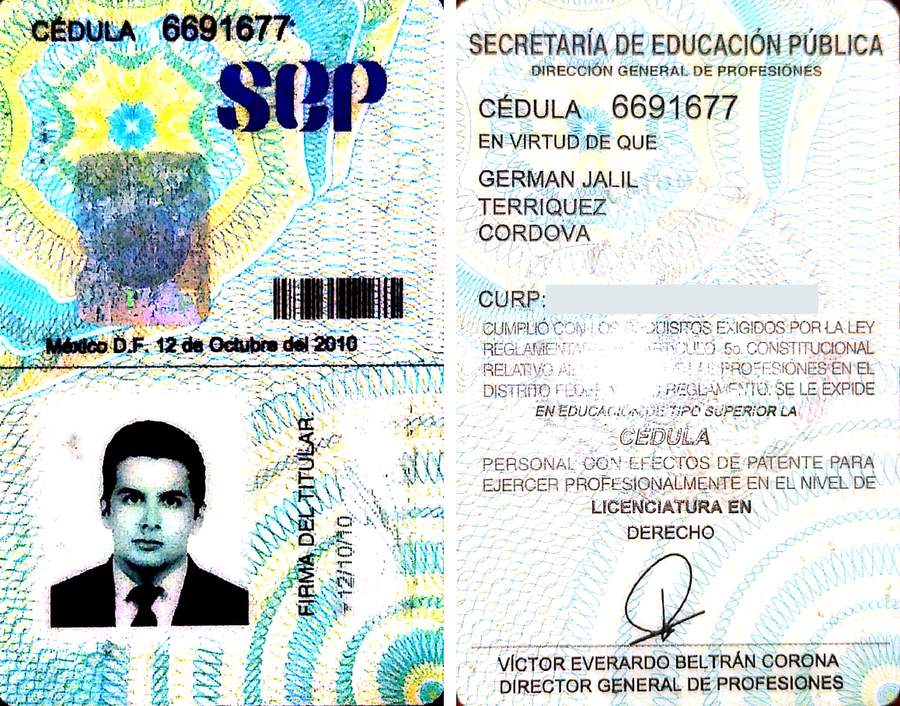
Check the attorney’s license here