
For most families the first real question after an airport arrest is not “guilty or not guilty” but “will they be home while the case goes on?” In Mexico that is decided by a control judge at the initial hearing, usually within days of the arrest, and the answer depends far more on the charge and on the ties the accused can prove than on nationality. If you are still in the first hours, start with our guide to arrests at Mexican airports; this page covers what comes next.
Two very different starting points
Mexican law separates offenses into two groups for this purpose.
- Mandatory pretrial detention (prisión preventiva oficiosa). Article 19 of the Constitution lists offenses for which the judge must order detention regardless of the person’s circumstances. The list includes, among others, organized crime, kidnapping, human trafficking, homicide, rape, crimes involving synthetic drugs and fentanyl, crimes committed with weapons and explosives, and offenses involving firearms reserved for the military. The same article adds that any national or foreigner involved in illegally bringing weapons into Mexico receives mandatory pretrial detention. That is why a forgotten box of ammunition in a suitcase is so serious.
- Everything else. For all other offenses, the prosecutor may ask for detention only if other measures are not enough to guarantee that the person will appear, protect the victim or witnesses, or protect the investigation (Constitution, article 19; National Code of Criminal Procedure, CNPP, article 167). Here the defense has real room to argue.
The menu of alternatives to jail
Article 155 of the CNPP lists the precautionary measures (medidas cautelares) a judge can impose instead of, or before resorting to, detention. The ones that matter most to foreign travelers are:
- Periodic check-ins before the judge or a designated authority.
- An economic guarantee (the closest thing to what Americans call bail, although there is no fixed bail schedule; see how bail works in Mexico).
- A prohibition on leaving the country, the town where the person lives, or an area set by the judge.
- Supervision by a person or institution.
- Electronic monitoring and, in limited cases, house arrest.
Under article 156 the judge must apply the principle of minimum intervention and explain why the measure chosen is the least restrictive one that still works.
What the judge weighs: flight risk
Article 168 of the CNPP tells the judge what to look at when deciding whether the accused will show up. For a U.S. resident the hardest point is the first one: ties to the place where the case will be tried, measured by home, habitual residence and family, and how easy it would be to leave or hide. The other factors are the maximum possible sentence, the person’s behavior after the event, and any history of ignoring court orders. Giving a false address is presumed to show a flight risk.
A foreigner cannot change where he or she lives, but the defense can still build a record the judge can rely on:
- A verifiable address in Mexico for the duration of the case (a rental contract, a relative’s home, a long-term hotel agreement).
- Proof of employment, property, school-age children or regular business in Mexico, if any.
- A clean criminal history and documents showing a stable life in the U.S.
- A concrete proposal: passport surrendered to the court, weekly check-ins, a guarantee the family can actually pay.
Can they go home to the United States?
Usually not right away. If the judge allows the case to continue in freedom, the order often includes a prohibition on leaving the country. Leaving without the court’s permission is a breach of the precautionary measure, and the prosecutor can then ask for a stricter one, including detention. Whether and how a person may travel during a pending case is covered in our guide on leaving Mexico while a criminal case is pending.
Ways a case can end without trial
Release is one question; ending the case is another. Depending on the charge, Mexican law offers several exits:
- Restorative agreements (acuerdos reparatorios): available for offenses prosecuted on complaint, negligent offenses, and property crimes without violence against people (CNPP, articles 186 and 187).
- Conditional suspension of the proceedings: available when the average prison term for the charged offense does not exceed five years and the victim has no well-founded objection; the judge sets conditions for six months to three years (CNPP, articles 192 and 195).
- Abbreviated procedure: the accused accepts responsibility in exchange for a reduced sentence; it requires the prosecutor’s request and the accused’s informed consent (CNPP, article 201). See plea bargains in Mexico.
These options are not available for every offense, and none of them should be accepted without a lawyer reviewing the file.
Frequently asked questions
Is house arrest possible for an American?
The CNPP allows home confinement in some situations, but the judge needs a real address in Mexico and a way to supervise compliance. It is more realistic for people with a stable residence in the country.
Can a precautionary measure be changed later?
Yes. The parties can ask the judge to review, replace or lift a measure when the circumstances change, for example once the family can show a stable address or after months of perfect compliance.
Does pretrial detention mean the judge thinks the person is guilty?
No. It is a precautionary decision about risk, not a verdict. The Constitution limits pretrial detention to two years unless the delay is caused by the defense’s own legal actions (article 20, section B).
How we help
At Justicia Transparente we have 15 years of experience in Mexican criminal defense and represent English-speaking clients at initial hearings, where these measures are decided. Send us the city, the date of the arrest and the charge, if you know it, and we will tell you what can realistically be argued.
Sources
- National Code of Criminal Procedure (CNPP), articles 155, 156, 167, 168, 186, 187, 192, 195 and 201.
- Mexican Constitution, articles 19 and 20.
Related guides: bail in Mexico: requirements.
The Mexican criminal process explained in English
Facing Charges in México?.


Known as “the Transparent Attorney,” he founded Justicia Transparente, turning it into a nationally recognized firm for its results and leadership. The author of four books, he has demonstrated that in this field, experience and strategy make the difference.
Written and reviewed by Germán Jalil Terríquez Córdova, Esq. — Founder and Managing Director of Justicia Transparente. Mexican criminal defense attorney with 15 years of experience. Professional license (cédula profesional) No. 6691677 issued by Mexico’s Ministry of Education (SEP).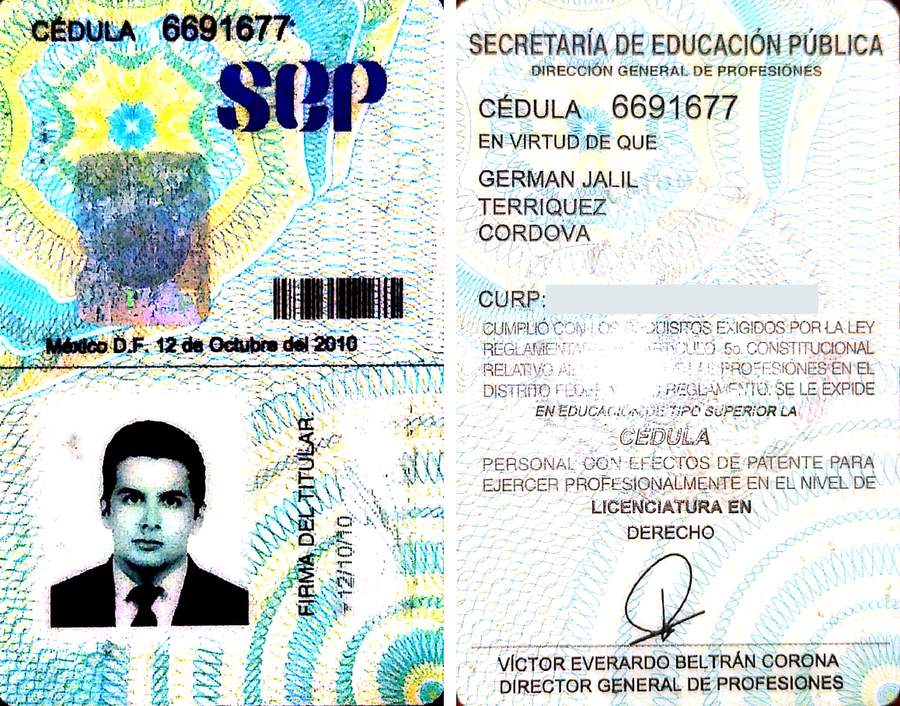
Check the attorney’s license here