
Many Americans assume that once they are released from custody in Mexico they can fly home and deal with the case from there. Sometimes that is legally possible; often it is not. The answer depends on where the case is procedurally and on what the judge ordered. This page explains the difference and what happens if a person leaves without permission.
Stage 1: under investigation, no judge involved yet
While a matter is only at the prosecutor’s office (Ministerio Público) and no judge has ruled, there is usually no court order restricting travel. That does not make leaving risk-free. If the prosecutor later decides to bring charges, a control judge can issue a summons, an order to appear or, when the prosecutor shows a need for caution, an arrest warrant (CNPP, article 141). A person who left the country may only learn about that warrant when trying to re-enter Mexico.
Stage 2: charged and released with precautionary measures
Once a person has been brought before a control judge, the judge may impose precautionary measures. One of them is, word for word, “the prohibition on leaving the country, the town where the person lives, or the territorial area set by the judge” without authorization (CNPP, article 155, section V). Other measures that often come with it are periodic check-ins and an economic guarantee.
If the order includes this prohibition, leaving Mexico breaches it. The general rules on what happens next are in article 174 of the CNPP:
- The supervision authority reports the breach and the prosecutor must ask for a hearing to review the measure, and may request an order to appear or an arrest warrant.
- If the person was released on an economic guarantee and fails to appear when summoned, the guarantor is given up to eight days to present the person; if that does not happen, the guarantee can be forfeited.
- A person who, without justification, fails to appear when summoned, or leaves his or her home without giving notice when obliged to do so, is declared a fugitive from justice (sustraído a la acción de la justicia), and that declaration leads to an arrest warrant (CNPP, article 141).
Asking the judge for permission to travel
Because the prohibition says “without authorization”, permission is the lawful route. In practice the defense files a written request with:
- The reason for the trip (work, medical care, a family emergency) and supporting documents.
- Exact dates, flights and the address where the person will be.
- A commitment to return and to keep complying with any other measure, sometimes with an additional guarantee.
The prosecutor and, where relevant, the victim are heard, and the judge decides. Requests backed by documents and a clean compliance record have the best chance.
Can the case be finished faster so the person can go home?
Sometimes. Depending on the charge, the case may end through a restorative agreement with the victim, a conditional suspension of the proceedings or an abbreviated procedure (CNPP, articles 186–187, 191–192 and 201). A conditional suspension can include its own conditions, such as residing in a specific place, for six months to three years (article 195), so ask before agreeing whether it lets you live in the U.S.
Frequently asked questions
Will immigration stop me at the airport?
Do not rely on assumptions either way. The relevant question is whether a judicial order prohibits travel. If it does, leaving is a breach whether or not anyone stops you at the gate.
Can my lawyer attend hearings for me?
Your defense attorney represents you, but some hearings require your presence and the judge can order you to appear. Ask your lawyer which ones are mandatory before planning any trip.
What if I already left?
Talk to a Mexican defense attorney before doing anything else. Depending on the stage of the case, it may be possible to justify the absence, ask for a hearing and propose a stricter measure instead of an arrest warrant.
How we help
For 15 years Justicia Transparente has handled criminal cases in Mexico, including requests to modify precautionary measures and travel authorizations for English-speaking clients. If you were arrested at an airport, also read our guide on what U.S. travelers should do first.
Sources
- National Code of Criminal Procedure (CNPP), articles 141, 155, 174, 186, 187, 191, 192, 195 and 201.
The Mexican criminal process explained in English
Facing Charges in México?.


Known as “the Transparent Attorney,” he founded Justicia Transparente, turning it into a nationally recognized firm for its results and leadership. The author of four books, he has demonstrated that in this field, experience and strategy make the difference.
Written and reviewed by Germán Jalil Terríquez Córdova, Esq. — Founder and Managing Director of Justicia Transparente. Mexican criminal defense attorney with 15 years of experience. Professional license (cédula profesional) No. 6691677 issued by Mexico’s Ministry of Education (SEP).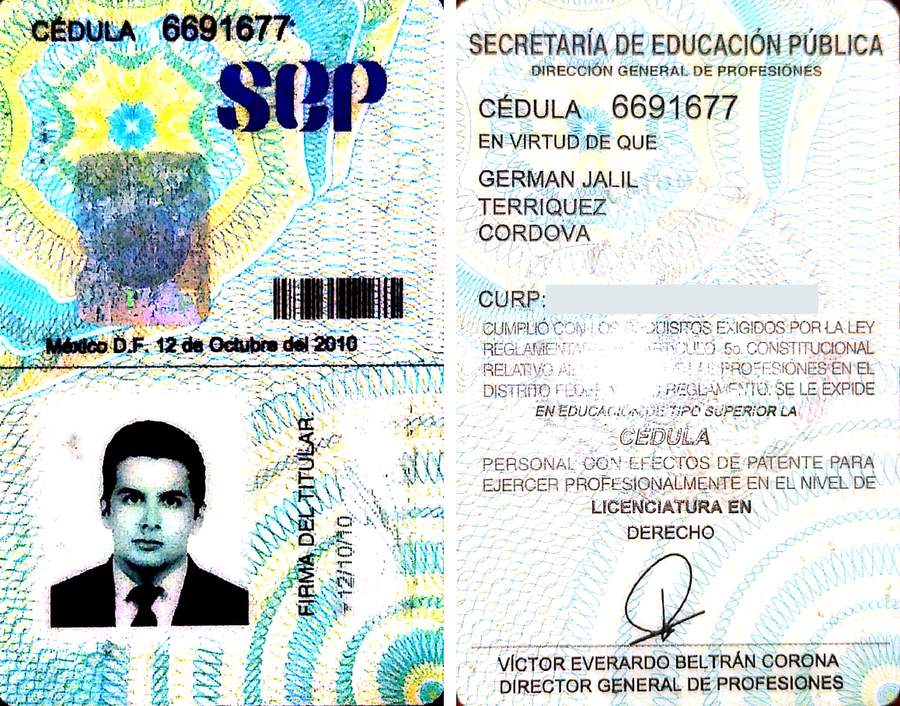
Check the attorney’s license here