
If someone has been detained at Los Cabos Airport, the most useful thing a family can have is a clear picture of what happens next and when. Mexico’s accusatory system follows fixed stages with short legal deadlines. Below is the timeline, with the article of law behind each step, so you can tell whether things are moving as they should. For general first-hour advice, see arrested at a Mexican airport: what U.S. travelers should do first.
Step 1: the arrest and transfer to the prosecutor
When a person is arrested in the act, the arresting officers must bring the person before the prosecutor (Ministerio Público) immediately, and the prosecutor records the time of the handover (CNPP, article 147). Los Cabos is in Baja California Sur: federal matters (weapons, drugs, customs) go to the federal prosecutor (FGR), and other offenses go to the Baja California Sur state prosecutor. You can also read how our criminal defense attorney in Los Cabos handles these cases.
Step 2: up to 48 hours with the prosecutor
The prosecutor first checks whether the arrest was lawful and must release the person if it was not (CNPP, article 149). The prosecutor may then hold the person for up to 48 hours (doubled for organized crime) before releasing him or her or bringing the case before a judge (Constitution, article 16). During this stage the detainee has the right to a lawyer, to remain silent, to contact family and to consular assistance (CNPP, articles 113 and 151).
Step 3: the initial hearing before a control judge
If the case goes to court, the initial hearing (audiencia inicial) covers, in order (CNPP, articles 307 and 308):
- The judge’s review of whether the arrest was lawful.
- The formal accusation (imputación).
- The person’s chance to speak or stay silent.
- Precautionary measures, if the prosecutor or victim asks for them.
Step 4: the 72- or 144-hour decision
The judge must decide whether to formally bind the person over for trial (vinculación a proceso) within 72 hours. The accused may ask to extend that to 144 hours to gather and present evidence (Constitution, article 19; CNPP, article 313). Families often hear that the person “chose to extend the term”. That is a defense strategy, not bad news.
Step 5: the investigation period and possible early exits
If the person is bound over, the judge sets a deadline to close the investigation. During this time the case may end through a restorative agreement, a conditional suspension of the proceedings or an abbreviated procedure, depending on the charge. Otherwise it moves toward an intermediate hearing and, eventually, a trial. For a broader view, see the Mexican criminal process.
Questions to ask at each stage
- Within the first hours: which agency holds the person, and on what charge?
- Before the initial hearing: has the defense seen the investigation file? The accused and the defense have the right to consult it and get copies once the hearing is called (CNPP, article 219).
- After the hearing: what precautionary measures were imposed, and do they include a travel restriction?
How we help
Justicia Transparente has 15 years of criminal defense experience in Mexico. Learn more about our Los Cabos criminal defense services.
Sources
- National Code of Criminal Procedure (CNPP), articles 113, 147, 149, 151, 219, 307, 308 and 313.
- Mexican Constitution, articles 16 and 19.
Related guides: arrests at Mexican airports: guns, drugs and smuggling.
The Mexican criminal process explained in English

Facing Charges in México?.


Known as “the Transparent Attorney,” he founded Justicia Transparente, turning it into a nationally recognized firm for its results and leadership. The author of four books, he has demonstrated that in this field, experience and strategy make the difference.
Written and reviewed by Germán Jalil Terríquez Córdova, Esq. — Founder and Managing Director of Justicia Transparente. Mexican criminal defense attorney with 15 years of experience. Professional license (cédula profesional) No. 6691677 issued by Mexico’s Ministry of Education (SEP).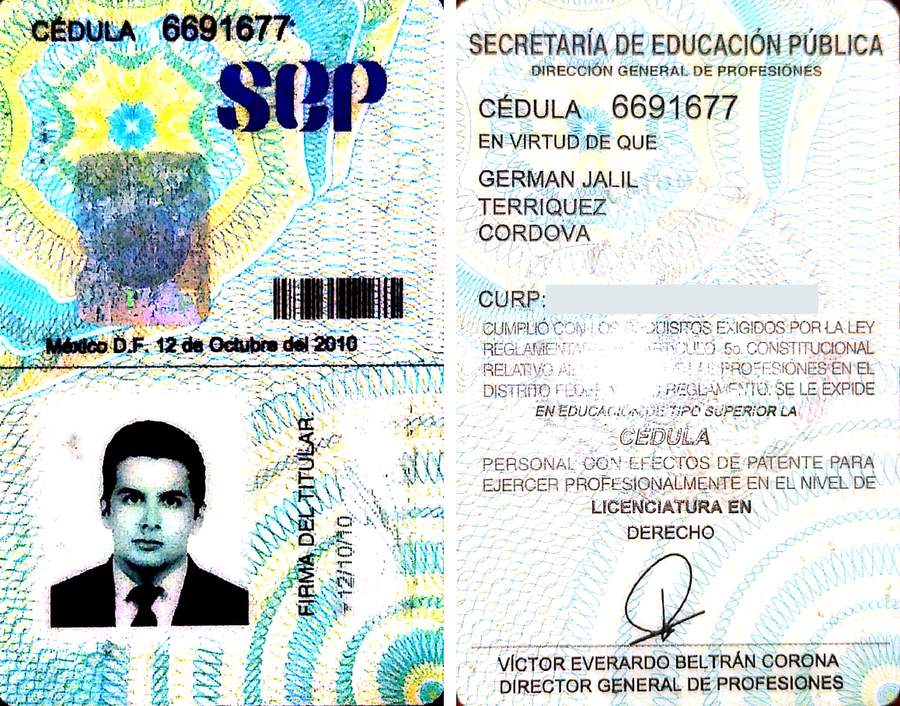
Check the attorney’s license here