
Tijuana’s airport is unusual: many of its passengers are foreign travelers who live in or cross from Southern California, including those who use the Cross Border Xpress bridge from the San Diego side. That border setting shapes the kinds of problems that lead to a detention at Tijuana Airport and the way the case is handled. Our office is in Tijuana, so this page focuses on what we see locally. For general first steps, read what U.S. travelers should do first.
Border-specific risks
- Items that are legal at home but not in Mexico. Ammunition, firearm parts, some prescription medication without a prescription, and cannabis products are a frequent source of trouble for travelers who pack in California. Offenses involving firearms reserved for the military, and illegally bringing weapons into Mexico, carry mandatory pretrial detention under article 19 of the Constitution.
- Cash. Amounts above US$10,000 or the equivalent must be declared when entering or leaving Mexico (Customs Law, article 9).
- Old warrants. Travelers who had a previous problem in Baja California sometimes learn about a pending arrest warrant only when they travel. An arrest on a warrant follows different rules from an arrest in the act; the person must be brought before the judge who issued it.
- Disputes and incidents in the terminal, parking areas or on board.
Who handles the case in Tijuana
Federal matters (weapons, most drug cases, customs offenses) go to the federal prosecutor (FGR) and federal judges. Other offenses go to the Baja California state prosecutor (Fiscalía General del Estado de Baja California) and state courts in Tijuana. Both apply the National Code of Criminal Procedure (CNPP), so the deadlines are the same: up to 48 hours with the prosecutor (Constitution, article 16), then an initial hearing and a decision on formal charges within 72 hours, or 144 if the accused asks for more time (Constitution, article 19; CNPP, article 313). For local details, see our page for a criminal defense attorney in Tijuana.
What to do in the first hours
- Stay silent about the facts and ask for a lawyer; you have both rights (CNPP, article 113).
- Ask for consular notification. The U.S. Consulate General in Tijuana is in the city. The prosecutor must inform you of your right to consular assistance and notify the consulate unless you and your lawyer ask that it not be done (CNPP, article 151).
- Have a family member collect documents that show ties to the area: proof of address in Mexico, if any, employment letters, frequent-crossing records. These help at the precautionary-measures stage (CNPP, article 168).
If the case is under state law
Some Baja California offenses are prosecuted only on a complaint (querella). If the detainee was arrested in the act for one of them and the victim does not file the complaint within the deadline of article 148 of the CNPP, the detainee must be released. In complaint-based cases, a restorative agreement can end the case (CNPP, articles 186 and 187).
How we help
Justicia Transparente has 15 years of criminal defense experience, with offices in Tijuana and Mexicali, and serves clients in English and Spanish. See also arrested in Tijuana and our overview of arrests at Mexican airports.
Sources
- National Code of Criminal Procedure (CNPP), articles 113, 148, 151, 168, 186, 187 and 313.
- Mexican Constitution, articles 16 and 19.
- Ley Aduanera (Customs Law), article 9.
Related guides: arrest warrant in Tijuana: customs and airport.
The Mexican criminal process explained in English

Facing Charges in México?.


Known as “the Transparent Attorney,” he founded Justicia Transparente, turning it into a nationally recognized firm for its results and leadership. The author of four books, he has demonstrated that in this field, experience and strategy make the difference.
Written and reviewed by Germán Jalil Terríquez Córdova, Esq. — Founder and Managing Director of Justicia Transparente. Mexican criminal defense attorney with 15 years of experience. Professional license (cédula profesional) No. 6691677 issued by Mexico’s Ministry of Education (SEP).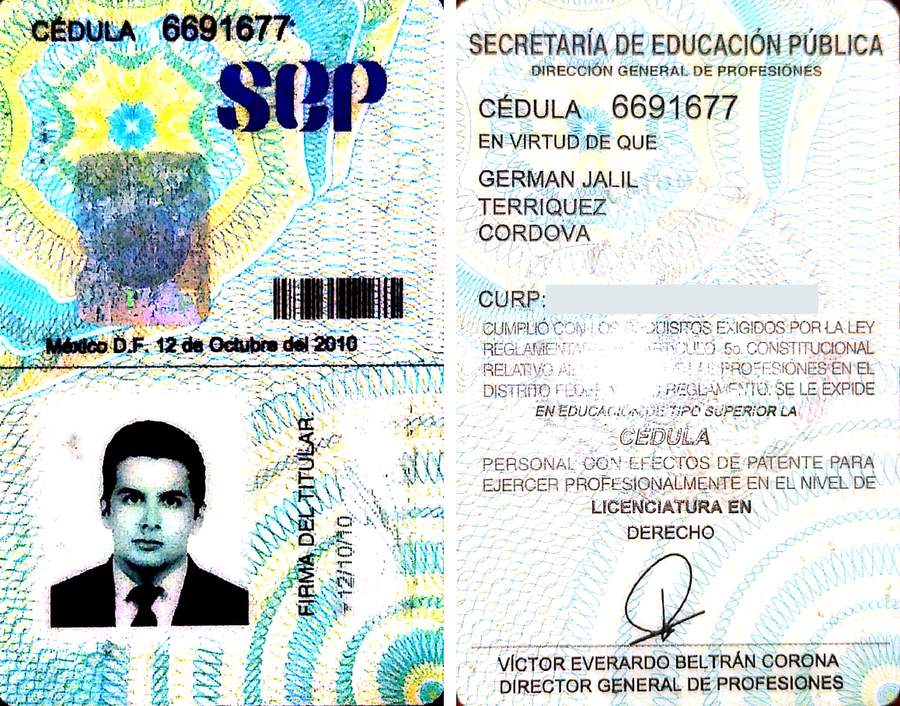
Check the attorney’s license here