

If you are living or staying in Mexico and are experiencing domestic violence, you can report it even if you do not speak Spanish and even if you are not a Mexican citizen. This guide explains how reporting works, which protection you can ask for right away and what happens afterwards, using the law of Baja California as the main example. If you are in immediate danger, call 911.
You have the right to an interpreter
Victims who do not speak or understand Spanish have the right to a free interpreter or translator from the moment they file the report until the end of the case (National Code of Criminal Procedure, CNPP, article 109, section XI). Ask for one before you give your statement. You also have the right to legal advice, to be treated with respect, and to receive urgent medical and psychological care (article 109).
What counts as domestic violence
In Baja California, the crime of family violence (violencia familiar) covers acts of domination, control or physical, psychological, property-related or economic aggression against a spouse, relative, cohabiting partner or dating partner, whether or not you live together (Baja California Criminal Code, article 242 BIS). Examples include hitting or pushing, threats and humiliation, destroying or keeping your documents, and controlling the money you need to live. The penalty is six months to four years in prison, and the aggressor must undergo psychological treatment.
Emergency protection you can request
When you report, ask the prosecutor for the protection measures you need (CNPP, article 137):
- An order prohibiting the aggressor from approaching or contacting you.
- Removal of the aggressor from the home.
- Immediate return of your personal belongings and identity documents, including your passport.
- Police protection or surveillance of your home.
- Transfer to a shelter with your children.
Within five days, a judge reviews the orders that keep the aggressor away from you or out of the home, and can confirm or adjust them.
Things that are different from the U.S.
- The case does not depend only on you. In Baja California, family violence is prosecuted ex officio (de oficio), so anyone who knows about it can report it (article 242 BIS).
- No private settlement. Restorative agreements are not allowed in family violence cases (CNPP, article 187).
- Your consulate can help. Consular staff can provide information, lists of local lawyers and contact with family, although they cannot act as your lawyer.
How to document what happened
- Photos of injuries or damaged property, with dates.
- Screenshots of messages, voice notes and call logs.
- Medical or psychological records.
- Names of neighbors, relatives or coworkers who saw or heard something.
How we can help
Justicia Transparente has 15 years of experience in Mexican criminal law and helps English-speaking victims request protection orders and follow up on their complaint.
Filing a report is one step. What the law does with a later request to take the complaint back is in what happens if the alleged victim wants to withdraw the complaint. The hearings that can follow are in the Mexican criminal process step by step. If someone is already in custody, release is a court question: how bail works in Mexico. Those first hours are in the protocol for an arrest in Mexico.
Related guides: what to do after an arrest for domestic violence in Mexico.
Real case from our firm
This is a ruling from our firm whose English-language document has been reviewed in a public version and does not expose unredacted client personal data: Domestic violence case closed. The full list is on Successful Cases.
The Mexican criminal process explained in English
Facing Charges in México?.


Known as “the Transparent Attorney,” he founded Justicia Transparente, turning it into a nationally recognized firm for its results and leadership. The author of four books, he has demonstrated that in this field, experience and strategy make the difference.
Written and reviewed by Germán Jalil Terríquez Córdova, Esq. — Founder and Managing Director of Justicia Transparente. Mexican criminal defense attorney with 15 years of experience. Professional license (cédula profesional) No. 6691677 issued by Mexico’s Ministry of Education (SEP).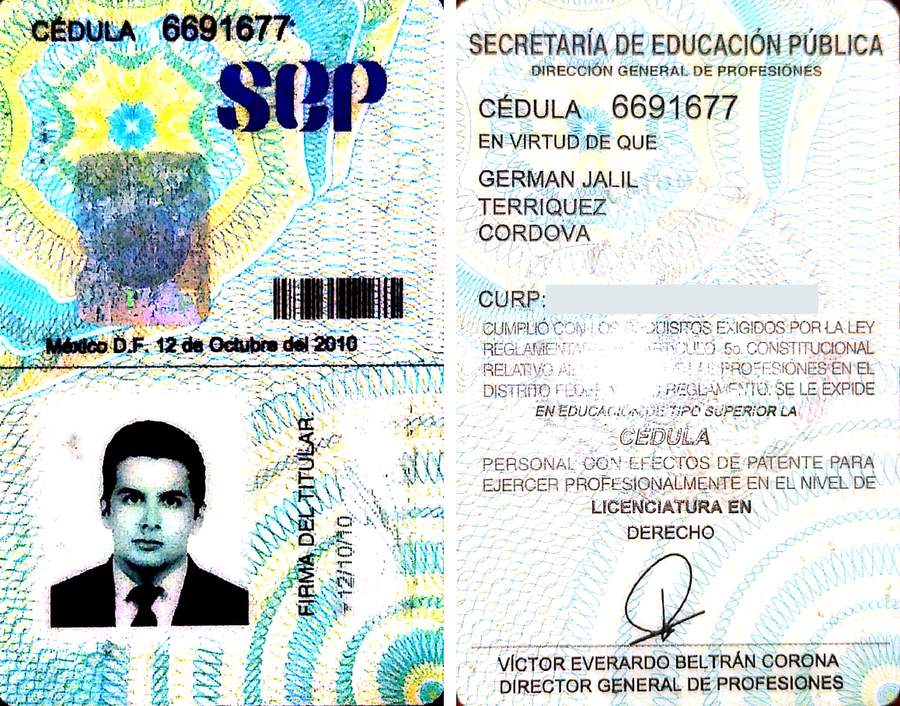
Check the attorney’s license here