


Many criminal matters in Mexico start not with an arrest but with a piece of paper: a summons from the prosecutor’s office or from a court. How you respond in the next few days often decides whether the matter stays manageable. These four steps focus on that moment. If you are already formally accused and want a broader overview of your rights, read accused of a crime in Mexico.
Step 1: find out who is calling you and in what role
Not every summons means you are the suspect. Read the document carefully, or have a lawyer read it, and answer three questions:
- Who issued it? The prosecutor (Ministerio Público) during an investigation, or a control judge.
- In what capacity are you called? As a witness, as a victim, or as the person under investigation (imputado).
- For what date, time and place? Write it down and confirm it.
If a judge is calling you to an initial hearing while you are free, that hearing must be held within fifteen days of the prosecutor’s request (National Code of Criminal Procedure, CNPP, article 310).
Step 2: get a licensed criminal defense lawyer before you appear
The CNPP requires your defense lawyer to hold a law degree and a professional license (cédula profesional), and to prove it to the court (articles 115 and 116). Once you are called to appear as the person under investigation, you and your lawyer have the right to see the investigation records (article 218), and once the initial hearing is set you can get copies to prepare (article 219). A lawyer who has read the file before you speak is your best protection. See also criminal lawyers in Mexico.
Step 3: never ignore a summons
Missing a summons without a valid reason has concrete consequences. The judge can order you brought in by the police (orden de comparecencia) and, if you resist or avoid that order, issue an arrest warrant. A person who fails to appear without justification can also be declared a fugitive from justice (sustraído a la acción de la justicia), which leads to an arrest warrant (CNPP, article 141). If you truly cannot attend, your lawyer must justify the absence in writing before the date.
Step 4: preserve evidence and ask about early solutions
- Keep everything: contracts, receipts, messages, emails, photos and the names of witnesses.
- Do not contact the complainant to “fix things” on your own; it can be read as intimidation.
- Ask your lawyer about early solutions. Depending on the offense, the case may end with a restorative agreement with the victim (CNPP, articles 186 and 187) or a conditional suspension of the proceedings (articles 191 and 192).
Common mistakes we see
- Going to the prosecutor’s office alone “just to explain”.
- Signing a statement without reading it or without an interpreter, if you do not speak Spanish (CNPP, article 45).
- Assuming that a matter is “civil” and will not become criminal.
- Waiting until an arrest warrant is issued to look for a lawyer.
How we help
Justicia Transparente has 15 years of experience in Mexican criminal law and represents English-speaking clients from the first summons onward.
The steps on this page are a checklist, not a closing of the file. The first hours are in the protocol for an arrest in Mexico, and the stages after that are in the Mexican criminal process step by step. Release, when a court can discuss it, is in how bail works in Mexico. An agreement with the prosecution, which has its own effects, is a plea bargain in Mexico. A warrant is a separate check: how to check if you have an arrest warrant in Mexico.
The Mexican criminal process explained in English
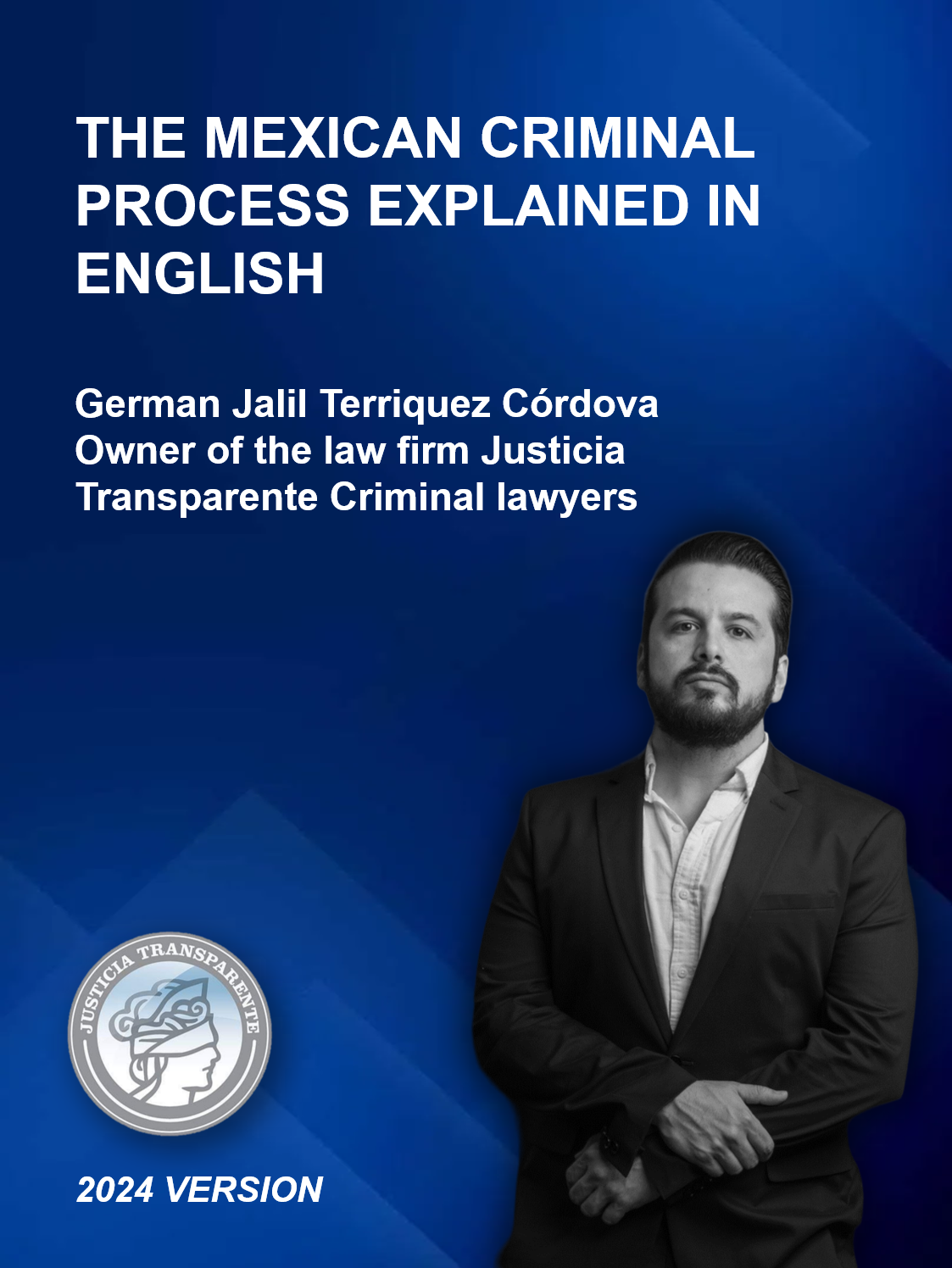
Facing Charges in México?.


Known as “the Transparent Attorney,” he founded Justicia Transparente, turning it into a nationally recognized firm for its results and leadership. The author of four books, he has demonstrated that in this field, experience and strategy make the difference.
Written and reviewed by Germán Jalil Terríquez Córdova, Esq. — Founder and Managing Director of Justicia Transparente. Mexican criminal defense attorney with 15 years of experience. Professional license (cédula profesional) No. 6691677 issued by Mexico’s Ministry of Education (SEP).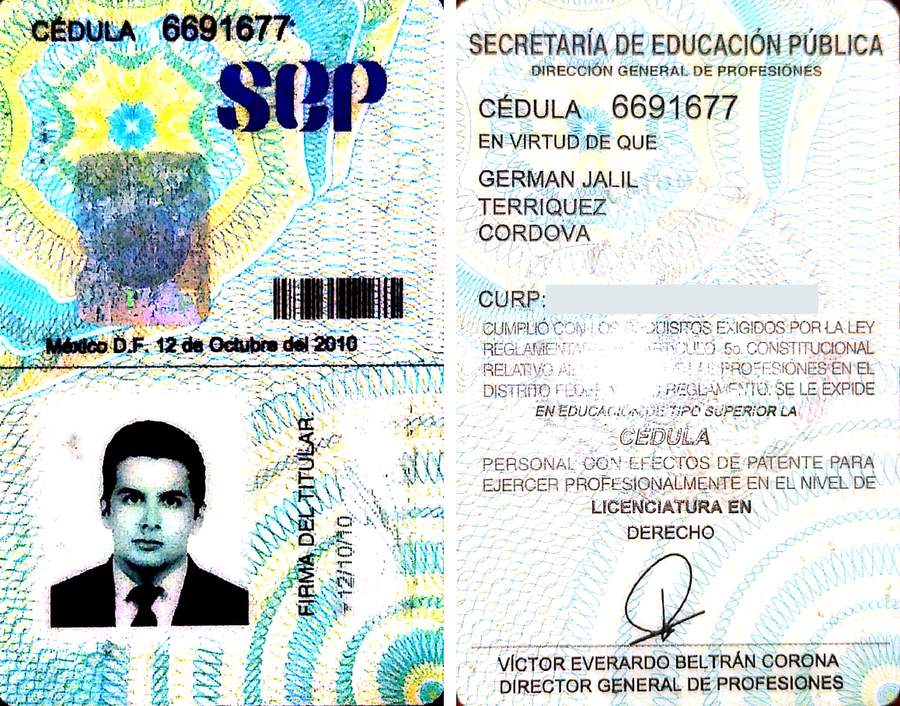
Check the attorney’s license here