

Buying Property in Mexico? In this guide: Before buying a home in Mexico, use this U.S.-buyer checklist to verify title, seller authority, liens, permits, payments and coastal-property rules. This information is general and educational; every transaction and any criminal-law issue must be reviewed under the facts and the Mexican laws that apply.

At Justicia Transparente, Lic. Germán Jalil Terríquez Córdova and our team have 15 years of experience in Mexican criminal law, including fraud linked to real estate. This guide combines our 15-point checklist with focused sections on beachfront and border purchases, fake listing websites, presale condos and assignment-of-rights deals. It is general information; every transaction must be reviewed on its own documents, and no outcome is guaranteed.
Table of Contents
- Buying Property in Mexico? Why a Great Listing Is Not Proof of a Safe Purchase
- Checks 1–3: Identify the Property, Its Owner, and the Chain of Title
- Checks 4–6: Look for Liens, Litigation, and Authority to Sell
- Checks 7–9: Check the Physical Asset and the Permission to Build
- Checks 10–12: Confirm the Closing Route and Protect the Money
- Checks 13–15: Understand Foreign-Buyer Rules, Taxes, and the Exit Plan
- What Counts as a Criminal Red Flag?
- Your Pre-Wire Action Plan
- The Seller Interview: Questions Worth Asking Twice
- Beachfront and Border Property: A Safe Closing Guide
- Fake Mexico Real Estate Websites: Spotting a Listing Scam Before Wiring Money
- Presale Condos in Tulum, Cancún or Los Cabos: Verify the Developer First
- Assignment of Rights (Cesión de Derechos): A Common Real Estate Trap
- A Note on Fraud and Legal Remedies
- Work With an Independent Mexican Legal Team
- Frequently Asked Questions
- Sources
Buying Property in Mexico? Why a Great Listing Is Not Proof of a Safe Purchase
A beautiful ocean-view condo and a polished English-language listing can make a transaction feel familiar to a buyer from San Diego, Orange County, or Los Angeles. But Mexico does not use the same title, escrow, disclosure, and recording systems found in California. The underlying questions are universal: who legally owns this specific property, who has power to sell it, what burdens affect it, and what rights will the buyer actually receive? A realtor’s promise is not a substitute for independent documentary verification. In Los Cabos, Cancún, Playa del Carmen, Tulum, Rosarito, Criminal defense in Tijuana and Mexico City, the paperwork—not the staging photographs—determines whether the transaction is defensible. An attractive investment is not necessarily fraudulent; the point of due diligence is to separate a legitimate seller from a transaction that cannot legally close.
Checks 1–3: Identify the Property, Its Owner, and the Chain of Title
First, obtain the exact street address, cadastral reference, lot number, unit designation, and legal description. A building’s marketing name may differ from the property identifiers recorded with the local Public Registry of Property (Registro Público de la Propiedad). Second, request the current recorded deed (escritura pública) and independently confirm the registered owner. Third, trace the chain of title, especially where prior transfers, probate, a developer subdivision, or a trust is involved. Compare names and identifiers rather than assuming that a sales brochure, property-tax bill, or utility statement proves ownership. Ask the notary and independent attorney to investigate inconsistencies. A seller offering only a photocopy, a generic map pin, or a claim that the title will be delivered later has not supplied the evidence a careful buyer needs.
Checks 4–6: Look for Liens, Litigation, and Authority to Sell
Obtain an up-to-date certificate or registry search concerning liens and encumbrances, called a certificado de libertad de gravamen where applicable. Mortgages, judicial attachments, pending disputes, easements, restrictions or recorded notices can materially affect value and transferability. Request tax and utility debt confirmations as relevant; unpaid balances may complicate closing even when they do not all create the same legal consequence. Verify whether the seller signs personally or through a power of attorney. A power must be authentic, effective, and sufficiently specific, and the signer must be authorized for this transaction. When a company sells, request its corporate documents and proof of the representative’s powers. A real seller and a real property can still be involved in a transaction the signatory has no authority to complete.
Checks 7–9: Check the Physical Asset and the Permission to Build
Visit the actual parcel or hire an independent professional to do so. Match its boundaries and location to survey, cadastral maps and registration documents. In condominiums, request the condominium regime and confirm that the unit legally exists as a transferable unit. For a presale apartment in Tulum or Playa del Carmen, compare promised amenities with approved plans, land use, construction permits and the municipality’s position. A reservation number or unit drawn on a rendering does not mean the unit has been legally constituted. Examine access, utilities, HOA obligations and coastal environmental restrictions when appropriate. Physical possession can reveal facts, but possession alone does not prove marketable ownership.
Checks 10–12: Confirm the Closing Route and Protect the Money
Choose an independent Mexican real estate attorney and identify the notary who will formalize the transfer. A Mexican notario público is a legally empowered professional with functions different from a typical U.S. notary public; buyers should still obtain independent advice because the notary is not a substitute for personal representation. Review the purchase agreement in Spanish and any English translation, including price, deadlines, contingencies, default remedies and how the deed will be delivered. Have counsel verify the recipient and purpose of every wire. Do not pay a stranger’s personal account simply because a salesperson says ‘that’s how we do closings down here.’ Require written receipts and an auditable payment trail. Consider a professionally administered escrow arrangement when legally and commercially appropriate, while checking the escrow provider itself.
Checks 13–15: Understand Foreign-Buyer Rules, Taxes, and the Exit Plan
Confirm whether the property lies inside Mexico’s constitutionally restricted zone: 50 kilometers from coastlines or 100 kilometers from borders. For residential property there, an eligible foreign individual commonly receives beneficiary rights through a Mexican bank trust (fideicomiso), rather than direct fee-simple title; the applicable trust permit, deed and terms require review. Outside that zone, a different route may be available subject to required formalities. Ask for a closing-cost worksheet covering acquisition taxes, notarial fees, registration costs, trust costs where relevant, and ongoing expenses. Finally, check whether the property can later be sold, inherited, rented or transferred as planned. The safest ‘deal’ is one whose legal structure matches the buyer’s intended use.
What Counts as a Criminal Red Flag?
Mexican fraud offenses generally concern deceptive conduct or taking advantage of error to obtain an unlawful benefit, but the precise elements and procedural requirements depend on the applicable state law and facts. A delayed construction schedule, defective workmanship, or ordinary breach of contract does not automatically amount to criminal fraud. Evidence becomes more concerning where the seller never owned the property, forged documents, sold the same unit repeatedly, invented a development, or knowingly represented nontransferable rights as full ownership. Preserve original advertisements, contracts, bank details, communications and version histories if the story changes. An early legal review can identify civil, consumer, administrative and potentially criminal exposure without overpromising a prosecution.
Your Pre-Wire Action Plan
Before sending a deposit, make a simple transaction folder: seller identification; title; registry search; corporate authority; survey; permit file; presale contract; trust analysis; tax position; closing instructions; and counsel’s written risk memo. Insist that the seller identify unresolved issues and a realistic deadline to cure them. If the broker pushes for an immediate nonrefundable transfer, slow the process and document why. A small legal review before wiring large sums may be more cost-effective than seeking recovery after the funds have dispersed across multiple accounts. Justicia Transparente can evaluate potential criminal-fraud indicators and coordinate with qualified real estate and notarial professionals as needed; a preventive consultation is not a guarantee of a particular outcome.
The Seller Interview: Questions Worth Asking Twice
Ask the seller to explain when and how the property was acquired, whether anyone else claims ownership, and whether any legal or financial proceeding affects the land. Repeat the same questions to the authorized representative and compare their answers against records. Ask which documents the seller can supply today, not which documents they expect to locate later. In a cross-border deal, request a verified written explanation of why money must move before the title investigation is completed. If relatives, spouses, heirs, co-owners or corporate shareholders may have an interest, identify the legal consent requirements before signing. A refusal to answer is not proof of fraud, but it is a practical reason to defer payment. Document your questions and obtain written answers so that your lawyer can test each claim against independent evidence. A defensible transaction does not depend on taking the salesperson at their word; it depends on a coherent paper trail that survives independent review.
Video: Lic. Germán Jalil Terríquez Córdova on protecting your rights in Mexico
In this video, Lic. Germán Jalil Terríquez Córdova, a Mexican criminal defense lawyer with 15 years of experience, explains general points about protecting your rights in Mexico. It is educational content and does not replace individual legal advice or guarantee any result.
Beachfront and Border Property: A Safe Closing Guide
Can an American Buy a Beach Home in Mexico?
Yes, but the legal path matters. A U.S. citizen considering a retirement condo in Rosarito, a family vacation house in Los Cabos, or an investment apartment near Cancún may hear that foreigners ‘cannot own’ Mexican coastal property. That oversimplifies the law. Article 27 of the Mexican Constitution restricts direct ownership by foreigners within 50 kilometers of coasts and 100 kilometers of international borders. A residential bank trust, called a fideicomiso, is a commonly used framework that gives the foreign beneficiary specified rights of use and enjoyment under Mexican law. It is not identical to a California fee-simple deed or an ordinary U.S. living trust. Buyers should verify the exact trust structure and the property’s location before committing.
How the Bank Trust Works—and What It Does Not Prove
For eligible residential transactions in the restricted zone, a Mexican bank serves as trustee, and the foreign buyer holds beneficiary rights under the trust deed. The federal foreign-relations authority oversees the relevant authorization framework, and trust terms should address duration, beneficiaries, succession, transfer and fees. Official guidance describes terms of up to 50 years, with renewal possibilities according to applicable rules. Crucially, the presence of the word fideicomiso in a brochure does not prove the seller’s title is valid or that the bank has agreed to act. The property must still be verified independently; the trust is a lawful acquisition structure, not insurance against fraudulent representations.
Rosarito and Tijuana: Border-Buyer Considerations
San Diego-area residents often consider Rosarito or Criminal defense in Tijuana because weekend inspections and cross-border management feel convenient. Buyers should nevertheless review registered title, subdivision status, access, property boundaries, existing possession, condominium rules and any claimed assignment of rights. Border proximity does not change the need for a restricted-zone analysis. If the transaction is pitched as ‘just a private contract’ with no bank or notary involvement, ask why and have counsel determine precisely what is being sold. A U.S. title insurance habit can be useful as a mindset, but don’t assume the Mexican registry and closing process function exactly like a California county recorder’s office.
Los Cabos, Cancún, Playa del Carmen and Tulum
In resort markets, one transaction may involve a developer, landholding company, sales agency, management company, lender, trustee and notary. Map these roles before signing. Confirm the seller’s authority; land title; approvals for construction; any master trust; condominium regime; access to common amenities; and whether rentals are permitted. In Tulum, investigate land classification and whether advertised plots have an established private-property chain. In Cancún and Playa del Carmen, focus on the distinction between a completed deeded condo and a future unit promised by presale. In Los Cabos, ask what is included in the residence price and what belongs to a separate club or service arrangement.
Mexico City: Different Geography, Same Fraud Questions
A Mexico City condominium generally does not face the coastal or border restricted-zone problem merely because the buyer is American. Yet title, seller authority, inheritance, liens, land-use issues, condominium documentation and building-condition questions remain essential. The applicable foreign-acquisition formalities should still be addressed. A buyer seeking a rental apartment in Roma, Condesa or Polanco should not skip legal review simply because the asset is finished and centrally located. Compare the unit’s registered identity with the seller’s description and request independent confirmation of any representative’s authority. Good location does not defeat a forged power of attorney or hidden ownership dispute.
A Step-by-Step Mexican Closing Timeline
First, conduct a conflict-free legal intake and determine the intended purchase structure. Second, identify the parcel and independently inspect title, liens, ownership chain and, where relevant, agrarian status. Third, verify the seller and any corporate or attorney-in-fact authority. Fourth, inspect permits, subdivision and condominium records as required. Fifth, establish the bank trust or other permitted foreign-buyer procedure and review its documentation. Sixth, negotiate a purchase agreement that conditions payments on key deliverables. Seventh, arrange a controlled closing with the notary, registration and verifiable funds movement. Eighth, obtain copies of executed deeds, registration evidence and any trust documentation. Specific timing and sequencing vary with the jurisdiction, property and financing.
Costs, Transfers and the Fine Print
Request a detailed estimate of notarial fees, acquisition-related taxes, registration charges, bank trustee setup and recurring fees, maintenance assessments, property taxes and any applicable withholding or transaction expenses. Distinguish purchase price from promised rental income and from club memberships or furniture contracts. Ensure that title and trust beneficiaries match the intended buyers and succession plan. If the property is sold through a company or involves a corporate transfer rather than a deed transfer, the transaction may carry a different risk profile and require additional tax and corporate analysis. Never substitute an ‘all-inclusive price’ slogan for a written closing statement.
Fake Mexico Real Estate Websites: Spotting a Listing Scam Before Wiring Money
A Professional Website Can Be Created in a Weekend
For a Californian scrolling listings after work, a website with luxury imagery, a WhatsApp icon, Google reviews and a Los Cabos address may look like a functioning brokerage. The problem is that the same design can be assembled by someone who has no authority to sell a single square foot of land. Fake sites may advertise nonexistent homes, copy legitimate agency photographs, impersonate an actual developer, or create a near-identical domain to intercept reservations. The sophistication of the page tells you almost nothing about whether the business has employees, licenses or operations in Mexico. The buyer’s job is to verify offline facts through independent sources, not simply click deeper into the seller’s website.
Common Online Scam Patterns
A cloned listing may take the photos of a real condo in Playa del Carmen and post them at a discount on another domain. An impersonation scam may claim to be a real broker but use a new email address and a bank account unrelated to that company. A fake-development campaign can show computer-generated buildings, invented buyer testimonials and an office location that turns out to be a coworking reception. A social-media ad may send the buyer to a WhatsApp number where a so-called sales director promises an exclusive three-hour price. None of these features alone proves fraud. Together, they provide reasons to require independent documentary corroboration before money moves.
Verify the Company Outside Its Own Site
Search the corporate name in public records where available and request its RFC, legal address and representative’s authority. Make a telephone call to a number independently obtained from a credible registry or longstanding official presence—not only the number in the advertisement. Verify the street address using a local professional or in-person visit and ask whether staff actually operate there. Find evidence of completed transactions and independently reachable clients if appropriate, while respecting their privacy. If a salesperson says the entity is newly incorporated, that is not a conviction; it simply means there is less track record and the property documents become even more important.
Inspect the Domain and Digital Footprint
Look for subtle changes in spelling, extra hyphens or unfamiliar top-level domains. A website’s HTTPS padlock confirms an encrypted connection, not business legitimacy. Search for copied paragraphs, reverse-search property images and compare listing details across established sources. Examine when the site appears to have existed and whether its phone number, company name and payment instructions are consistent. Treat online reviews as leads for verification rather than conclusive proof; reviews can be manufactured or attached to the wrong business. Ask to meet the representative on video at the property and then independently verify that the property and seller match the registration information.
The Bank Account Is the Highest-Risk Link
Fraud losses often occur when the buyer receives a last-minute message saying the deposit account has changed. Treat new instructions, personal accounts, crypto-only payments or wires to an unrelated country as major warning signs. Call a verified number already established earlier and confirm payment details with more than one trusted professional. Require the contract’s named recipient to match the legal parties and obtain a written breakdown of what each transfer purchases. Sending money to a person who promises to forward it later can make recovery harder. A seller who will not permit independently verified payment methods is giving you useful information about the risk of the transaction.
Check the Listing Against Real Property Records
Even if the agency is real, the offered property may not belong to its purported client. Obtain the parcel identifier, current registered deed, ownership information and relevant lien search. Ask the purported owner to establish authority directly through the attorney and notary, with identity and signing-power checks. Compare the property’s legal description, location and unit number to the sales listing. This matters in Criminal defense in Tijuana and Rosarito, where U.S. buyers may inspect a building in person and still be offered a legal interest different from the one shown. The same caution applies to Mexico City apartments where a legitimate building contains units with distinct ownership histories.
Screenshots Are Evidence; They Are Not Due Diligence
Before any deposit, preserve the domain name, listing URL, screenshots with dates, emails, chats, contracts, bank instructions and advertiser identity. But do not mistake evidence collection for transaction verification. Have a lawyer compare the seller’s representations against independent registry records and contract documents. If something looks wrong, avoid threatening the salesperson before preserving information. If you already sent a wire, contact the sending bank promptly to explore recall or fraud-reporting procedures, preserve records, and seek local legal advice about available remedies. Recovery is uncertain and may depend on timing and location of funds.
A Simple Two-Call Rule for U.S. Buyers
Before committing, arrange one independent call with a Mexican attorney who does not work for the salesperson and another with the notary, bank trustee or other relevant regulated professional whose role is central to the transaction. Establish their identity independently. Ask each to describe the property’s ownership and the actual closing pathway in their own words. If answers conflict, do not wire funds until they are reconciled. A legitimate seller should understand the need for verification, especially when the buyer is overseas. The right marketing response to digital fraud is not fear of every online listing; it is a repeatable process that turns an attractive lead into a documented, accountable transaction.
Presale Condos in Tulum, Cancún or Los Cabos: Verify the Developer First
Buying a Presale Condo in Tulum? That Rendered Rooftop Pool Is Not a Building Permit
Preconstruction apartments can be a sensible way to enter a coastal real estate market, but the difference between a lawful presale and a risky pitch may be invisible on Instagram. In Tulum, Playa del Carmen, Cancún and Los Cabos, attractive renderings, countdown discounts and projected vacation-rental income can create pressure to reserve before anyone has verified the project’s foundations. The buyer should think like a lender doing underwriting, not a vacationer selecting a hotel room: does the developer control the land, have a buildable project, possess financing, and owe the buyer enforceable deliverables? A presale contract is not the same thing as ownership of a completed registered condo unit.
Start With the Developer, Not the Sales Rep
Ask for the seller’s full registered corporate name, tax registration, physical office address and the legal authority of its representative. Check whether the developer is the landowner or operates through an agreement with a landowner or trust, and request the relevant paperwork. Review its previously delivered buildings, not only marketing testimonials. Identify the entities that collect funds, hold title, build the project and promise delivery; they may not all be the same. A sophisticated group structure is not itself a red flag, but unexplained entity changes or bank accounts in unrelated names deserve scrutiny. Make sure the legal counterparty in the contract matches the party whose capacity and assets you investigated.
Audit the Land, Project and Condominium Regime
Confirm the developer’s registered deed and the land’s exact parcel identifiers. Obtain the current property registry search for mortgages, attachments or restrictions. Review zoning, construction permissions, environmental restrictions and utility feasibility with competent local professionals. For a unit not yet physically built, verify whether and when the formal condominium regime will be constituted and when individual units can be deeded. If promised phases depend on future approvals, the contract should not describe those approvals as already obtained. Ask whether the drawings and square footage are contractual deliverables or illustrations subject to broad unilateral change.
What NOM-247-SE-2021 Can Help You Ask For
Mexico’s NOM-247-SE-2021 establishes requirements for commercial information, advertising and contracts in residential real estate transactions within its scope. The regulation addresses information concerning ownership status, encumbrances, presale documentation and certain contracts registered with PROFECO. A buyer should ask whether the specific developer and transaction are covered and request the applicable registered adhesion-contract information. In covered presales, request the executive project and plans, details of guarantees, additional features and the formal terms for future deeds. Do not assume every private transaction has identical consumer-law treatment; scope and facts matter. A contract bearing a professional logo does not itself establish regulatory compliance.
Follow the Deposit and the Construction Milestones
The schedule should define the reservation amount, when it becomes refundable or nonrefundable, what triggers each subsequent payment, and the evidence that a milestone was reached. Do not equate a salesperson’s email saying ‘foundation complete’ with an independent progress report. Review any financing secured against the land and how mortgages will be released for individual units. Determine who holds the money and whether there is an actual third-party escrow arrangement rather than an account merely labeled ‘escrow.’ Ask what happens if an anticipated bank trust cannot be established for the buyer, or if the development is delayed far beyond the advertised handover date.
Projected Airbnb Returns Are Not Contractual Guarantees
Coastal pitches often combine a unit purchase with an income chart and property-management offer. Treat occupancy projections, appreciation forecasts, rent estimates and financing assumptions as forecasts, not facts. Investigate local permitted uses, condominium bylaws, management fees and applicable rental restrictions. Confirm whether rooftop amenities, parking spaces, furniture packages and storage are part of the legal unit, common property or separate contractual benefits. A recurring source of disputes is the gap between what the brochure pictures and what the legally binding Spanish-language contract promises. Preserve copies of every deck and advertising claim, but negotiate concrete deliverables into the executed agreement.
Build a Developer Verification Scorecard
Before reserving, mark each subject green, unresolved or unacceptable: legal seller verified; land deed verified; registry search current; construction permits independently checked; condominium pathway documented; governing contract reviewed; milestones objective; refunds and delay remedies clear; payment recipient verified; and foreign-buyer acquisition path identified. Do not average a serious ownership defect against several nice amenities. One unresolved fatal issue can make the entire purchase impractical. Ask for a written attorney memorandum identifying conditions that must be satisfied before you release money. This is especially valuable when the buyer is in California and the project team is several time zones away.
What if the Building Never Gets Finished?
Delay by itself does not conclusively establish criminal intent. A genuine developer can experience financing, construction or permitting problems; contract, consumer and administrative remedies may be relevant. Potential fraud concerns increase if promoters knew land was unavailable, fabricated permits, invented construction progress, or diverted funds under materially false representations. Early legal work should preserve contracts, timestamped marketing, payments, corporate links and the evidence of the promises made at sale. The goal of this guide is to avoid arriving at that stage. A preventive review of a presale package can be performed before a buyer commits to a large nonrefundable deposit.
Assignment of Rights (Cesión de Derechos): A Common Real Estate Trap
The Phrase That Deserves a Second Look
A listing may say ‘ocean-view lot—transfer by cesión de derechos’ and quote a price far below comparable titled homes. To a California buyer, assignment of rights may sound like a routine transfer of a purchase contract. In Mexican transactions, however, it can refer to very different rights: a contractual claim, possession, inheritance expectations, agrarian rights, trust beneficiary rights, or rights under an existing presale agreement. Not all are equivalent to registered ownership. The key question is not whether the document is called cesión de derechos. It is: exactly what right is being transferred, who holds that right, is it legally transferable, and can it lead to the deed or use the buyer expects?
Possession, Contract Rights and Title Are Different Things
Someone can live on land, pay utility bills and local fees, or possess a contract without being the registered owner entitled to execute a sale. Ownership (propiedad) of a privately titled parcel is a different legal position from physical possession (posesión). An assignee might receive only the assignor’s contract rights, including all limitations and conditions. If the original seller never had enforceable rights, the assignment does not magically create them. This resembles the U.S. principle that a person ordinarily cannot convey better title than they have, but Mexican property, registration and agrarian rules govern. Have counsel identify the original instrument, every assignment in the chain and the exact legal basis for the purported transfer.
How “Rights” Get Marketed as a House
One recurring risk pattern is a broker advertising a finished home in Criminal defense in Tijuana or Rosarito and then presenting only a privately signed assignment at closing. Another is a lot in Tulum or the Riviera Maya offered with promises of regularization ‘soon.’ A third is an alleged inheritance right before probate and adjudication have been completed. Some arrangements are legitimate and useful for their intended purpose; others are misdescribed. The risk is especially high when marketing uses terms like ‘full ownership,’ ‘clear title’ or ‘ready to build’ while the paperwork transfers only a contingent claim. Ask the seller to put in writing what the buyer can and cannot do immediately after signing.
Ejido and Agrarian Land: A Separate Legal System
Ejido land is not simply cheap private property waiting for a notary stamp. Agrarian law involves specific community and individual rights and, where a transition to private ownership is possible, additional conditions and formalities. Records may need to be examined through the Registro Agrario Nacional, and the buyer should obtain a precise legal assessment rather than relying on an agent who says the land ‘will become private next month.’ Do not assume a private assignment, possession certificate or municipal receipt changes agrarian land into registered private title. For a foreign buyer seeking a residential coastal home, agrarian status and restricted-zone rules may intersect and require specialized analysis.
The Seven Documents to Demand
Request the original document creating the claimed right; the complete assignment history; identities and authority of all assignors; registry or agrarian records, depending on land status; the parcel map and cadastral identifiers; evidence of required notices, consents and approvals; and written analysis of whether the right can be perfected into the promised property interest. If the right arises from a presale contract, also request the developer’s title and its consent to assignment where required. If it arises from an estate, demand the probate and authority documents. Avoid a deal where one missing link is repeatedly explained away with the phrase ‘everybody buys this way.’
Common Warning Signs in Los Cabos, Rosarito and Tulum
Watch for an unusually steep discount accompanied by cash-only closing demands. Be cautious if the seller refuses a registry search, uses a different name from the recorded owner, claims the notary is unnecessary, or will not provide the original underlying contract. Also question promises that you can obtain a building permit, bank financing or a bank trust immediately, despite incomplete title. A friendly agent, furnished model unit and social-media testimonials do not cure these gaps. The risk is not limited to beaches: Mexico City properties involving inheritance or multiple co-owners can also generate disputed rights. In every location, focus on the category of right and whether the purported seller actually controls it.
A Safer Contract and Exit Strategy
If counsel determines that an assignment is legally appropriate, draft precise representations about the right, chain of ownership, required third-party consent, outstanding obligations and remedies if perfection fails. Use documented payment conditions tied to verifiable deliverables, rather than transferring the entire price against a promise. Analyze whether the buyer can transfer the rights onward and what happens if the developer, community, prior seller or estate refuses consent. Require Spanish-language review of governing documents, even if the sales pitch is in flawless English. Sometimes the correct business decision is to pass on a below-market property because the ownership pathway is too uncertain.
A Note on Fraud and Legal Remedies
The existence of a risky transaction does not automatically establish a criminal offense. A Mexican fraud investigation typically requires the applicable local statutory elements and evidence of deception or unlawful gain; an ordinary contract breach may instead call for civil or consumer remedies. State law, land status, documentation and the timing of communications matter. This article is educational, not individualized legal advice, and it does not create an attorney-client relationship.
Work With an Independent Mexican Legal Team
Justicia Transparente works with clients navigating criminal-law risks in Mexico. For a preventive transaction review, the key is to engage independent counsel who can evaluate potential fraud indicators and, where appropriate, coordinate title, notarial, agrarian and real-estate-specialist checks before money changes hands. Ask for the proposed scope, deliverables, fees and professional roles in writing. No lawyer can guarantee a purchase or a future outcome.
Frequently Asked Questions About Buying Property in Mexico
Can a U.S. citizen own a home in Mexico?
Yes, subject to location and structure. Coastal and border residential purchases commonly involve a bank trust; confirm the specific route with Mexican counsel.
Is a property tax bill enough proof of ownership?
No. Seek recorded title and independent registry checks.
Does an online listing prove a condo exists legally?
No. Verify the physical unit, permits and condominium documentation.
Should I wire a reservation deposit before seeing the deed?
Do not treat an urgent deposit request as a substitute for document review; ask counsel about refundable conditions and verified recipients.
Is a fideicomiso the same as a U.S. living trust?
No. Both are trusts, but their legal purposes and rights differ.
Do foreigners need a fideicomiso in Mexico City?
Not solely because they are foreign: the restricted-zone analysis differs, though other acquisition formalities apply.
Can an American buy property in Rosarito without checking title?
No responsible buyer should skip independent title review.
Does HTTPS mean the listing is legitimate?
No. It protects the connection, not the truth of the advertisement.
Can a real estate scam use a legitimate company name?
Yes. Impersonators can copy names, photos and logos.
How do I verify a last-minute change of bank account?
Confirm through an independently obtained, previously verified contact method before paying.
Are Tulum presale condos illegal?
No. The issue is whether the particular project has lawful authority and enforceable terms.
Should the developer provide construction permits?
Ask for relevant permits and have a local professional verify them with the competent authority.
Does PROFECO approve every development?
No. Contract registration and consumer obligations are not guarantees that a project is financially sound.
Is cesión de derechos always a scam?
No. It is a legal mechanism used for different rights; the danger is treating a limited right as registered title.
Can I build on land purchased through an assignment?
Only after verifying land status, permits and the exact rights acquired.
Can a notary make ejido land private by signing an assignment?
No. Agrarian conversion and transfer rules cannot be skipped.
Need a preventive legal review?
Justicia Transparente works with clients navigating criminal-law risks in Mexico and related fraud complaints. For a preventive transaction review, engage independent counsel who does not work for the salesperson. Request an online consultation or review our practice areas. No prior analysis guarantees a result.
Sources
- Mexico Ministry of Foreign Affairs — restricted-zone bank trust: https://sre.gob.mx/permiso-para-constituir-un-fideicomiso-en-zona-restringida
- Ministry of Economy — NOM-247-SE-2021: https://platiica.economia.gob.mx/normalizacion/nom-247-se-2021/
- Official Gazette — NOM-247-SE-2021 full text: https://sidof.segob.gob.mx/notas/docFuente/5646251
- National Code of Criminal Procedure (official publication): https://sidof.segob.gob.mx/notas/docFuente/5334903
Real case from our firm
This is a ruling from our firm whose English-language document has been reviewed in a public version and does not expose unredacted client personal data: Recovery of 30 thousand dollars for fraud in investment simulation. The full list is on Successful Cases.
The Mexican criminal process explained in English
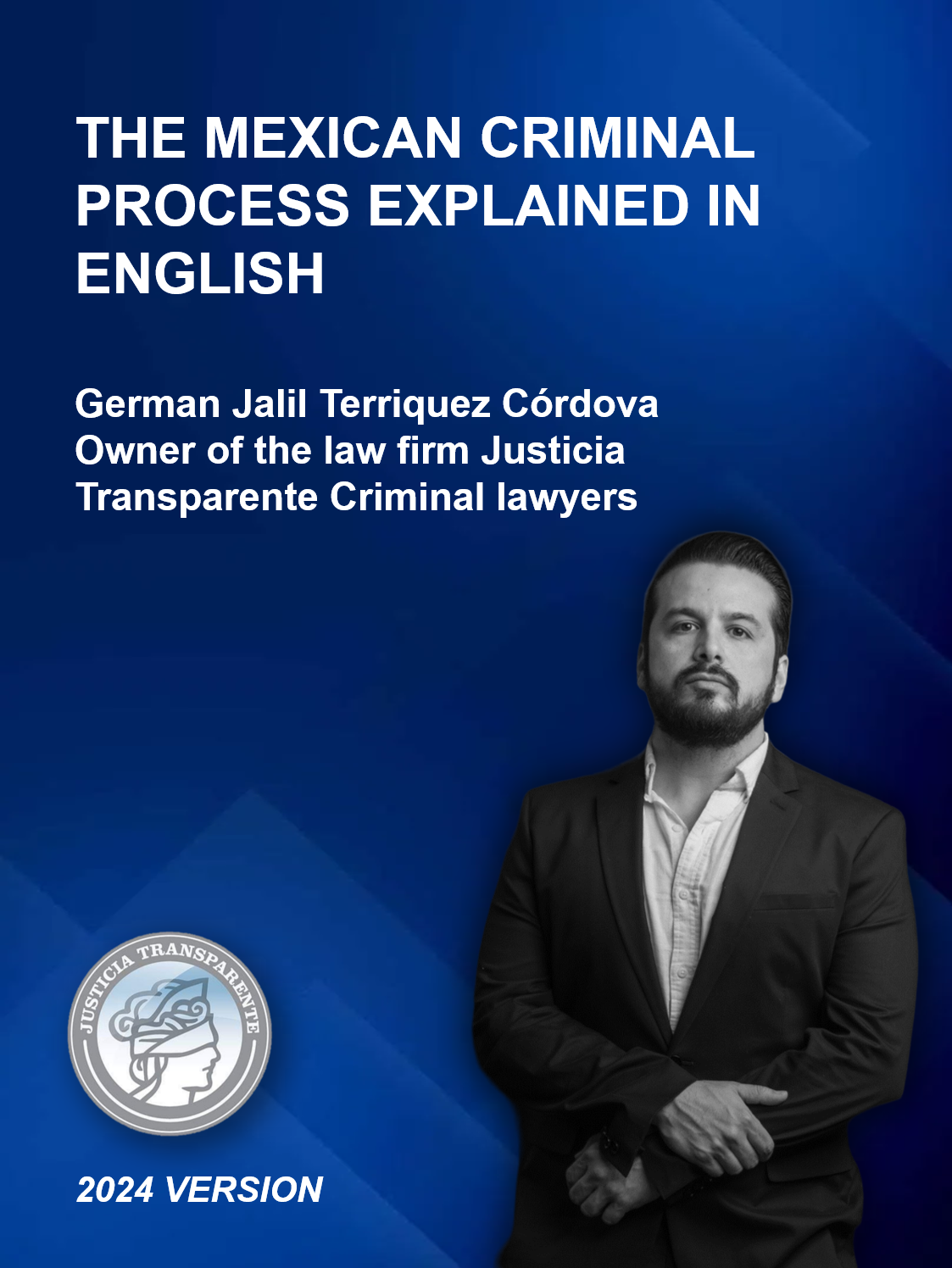
Facing Charges in México?.


Known as “the Transparent Attorney,” he founded Justicia Transparente, turning it into a nationally recognized firm for its results and leadership. The author of four books, he has demonstrated that in this field, experience and strategy make the difference.
Written and reviewed by Germán Jalil Terríquez Córdova, Esq. — Founder and Managing Director of Justicia Transparente. Mexican criminal defense attorney with 15 years of experience. Professional license (cédula profesional) No. 6691677 issued by Mexico’s Ministry of Education (SEP).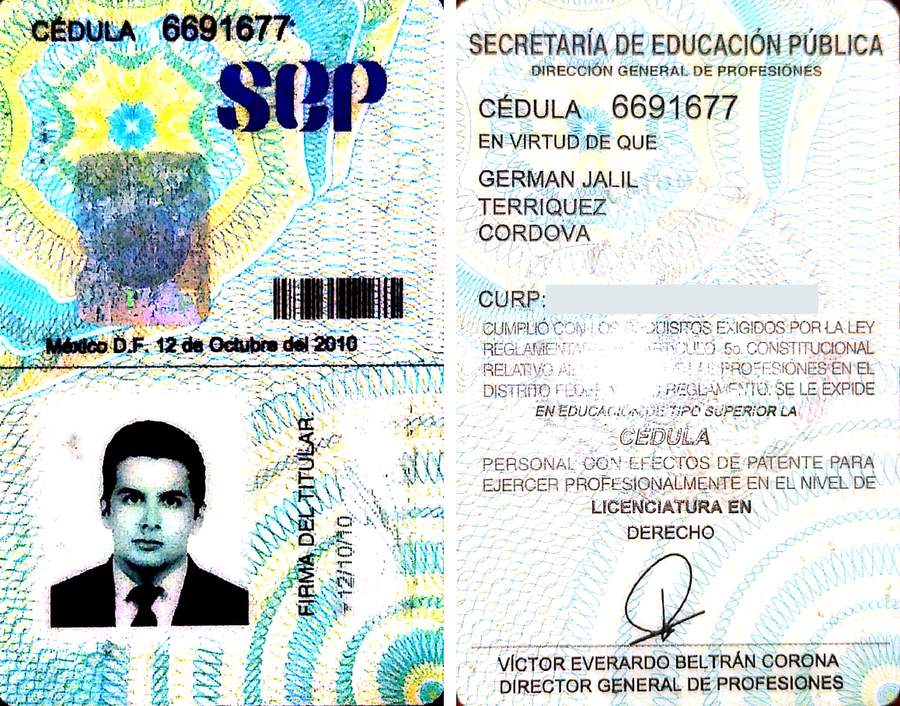
Check the attorney’s license here